
A zero energy home produces as much renewable energy as it consumes over the course of a year, slashing your utility bills to near-zero while dramatically reducing your carbon footprint. The path to achieving this in Colorado combines two critical steps: maximizing your home’s energy efficiency through upgrades like insulation and air sealing, then offsetting remaining energy needs with solar panels or other renewable systems.
Colorado homeowners have a distinct advantage in this pursuit. Our state averages over 300 days of sunshine annually, making solar generation highly productive. Combined with state and federal incentives available in 2026, the financial case for zero energy homes has never been stronger. What once seemed like an aspirational goal reserved for new construction is now achievable for existing homes through strategic retrofits.
The process starts with understanding where your home loses energy. Most Colorado homes waste significant heating and cooling through inadequate insulation, air leaks around windows and doors, and inefficient HVAC systems. Addressing these issues first reduces the size and cost of the solar array you’ll need, making the entire project more affordable.
The timeline varies based on your home’s current condition and your budget, but most homeowners complete the transition in phases over one to three years. Starting with a comprehensive energy audit identifies your biggest opportunities for improvement and creates a roadmap tailored to your specific home. The investment pays dividends through eliminated energy bills, increased home value, and protection against rising utility rates for decades to come.
What Is a Zero Energy Home?
A zero energy home produces exactly as much energy as it consumes over the course of a year. You might also hear these called net-zero homes or zero net energy (ZNE) homes, all these terms describe the same concept. Think of it as achieving perfect balance: your home generates enough renewable energy (typically through solar panels) to offset every kilowatt-hour you pull from the grid for heating, cooling, appliances, and lights.
Here’s how it works in practice. During sunny summer days, your solar panels produce more electricity than your home needs, sending the excess back to the grid. On cloudy winter days or at night, you draw power from the grid. At the end of twelve months, the energy you’ve exported equals what you’ve imported, resulting in a net consumption of zero. Your electric bill? Essentially nothing beyond basic connection fees.
It’s worth understanding the variations. A true zero energy home hits that perfect annual balance. A near-zero energy home gets close, maybe covering 80-90% of its needs, but still pulls a small amount from the grid. This might happen if roof space limits solar capacity or if the home’s energy use is higher than initially projected. Some homes even achieve zero energy ready status, meaning they’re built with exceptional efficiency (the insulation, windows, and systems) but haven’t yet added the renewable generation.
The key distinction lies in two parts: first, dramatically reducing energy demand through superior efficiency, and second, generating renewable energy on-site to cover what remains. You can’t solar-panel your way out of an inefficient home. The foundation is always cutting waste first, then producing clean energy to match your reduced needs.
Why Colorado Is Perfect for Zero Energy Homes
Colorado’s combination of natural advantages and forward-thinking policies creates nearly ideal conditions for zero energy homes. If you’re considering this path, you’re in one of the best states to make it work.
The sunshine advantage here is real. While the 300 days of sun myth gets debated in weather circles, Colorado consistently ranks among the top states for solar potential. Denver averages 245 sunny days annually, but more important than the number is the intensity. At our high elevation, the atmosphere is thinner, which means less filtering of solar radiation. Your panels capture more energy per hour of sunlight than identical systems at sea level. This elevation benefit can boost solar output by 10 to 15 percent compared to coastal installations.
The state’s climate itself helps your efficiency efforts. Colorado’s low humidity means less latent cooling load in summer. Our temperature swings between day and night let you use natural ventilation strategies that simply don’t work in muggy climates. Cold winters do increase heating demands, but modern heat pumps perform well in our dry cold, and superior insulation works harder here because we maintain larger temperature differences between inside and outside.
Colorado’s policy environment backs your investment. The 2026 Home Efficiency Rebates program offers substantial support for efficiency upgrades and heat pump installations, reducing upfront costs significantly. State renewable energy standards push utilities toward cleaner grids, which means any electricity you do draw increasingly comes from renewable sources. Net metering policies let you bank excess solar production as credits, essential for balancing seasonal variations.
The economics tilt in your favor too. Colorado electricity rates, while moderate now, trend upward. Locking in zero energy costs protects you from future rate increases. Property values reflect this: zero energy homes command premiums in Colorado’s competitive real estate market, particularly in sustainability-conscious communities along the Front Range.
You’re building or retrofitting in a state that makes zero energy practical, not aspirational.
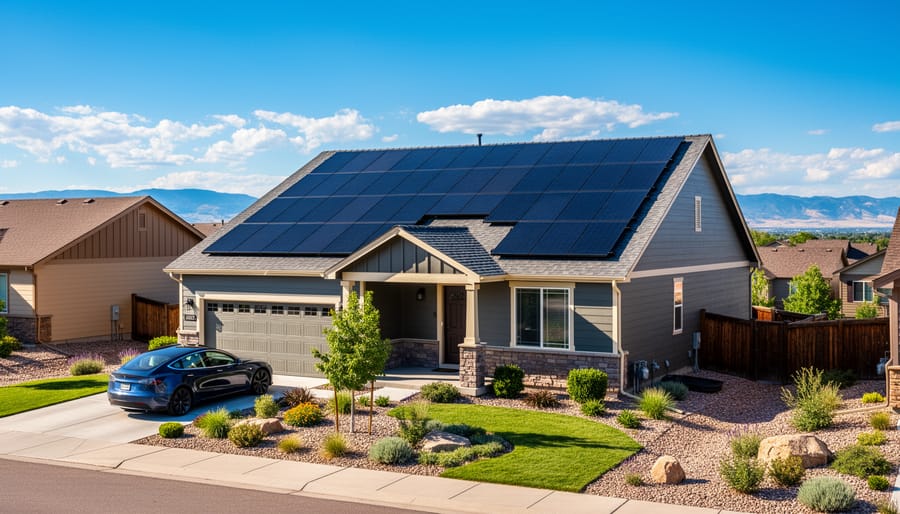
The Four Pillars of Zero Energy Home Design
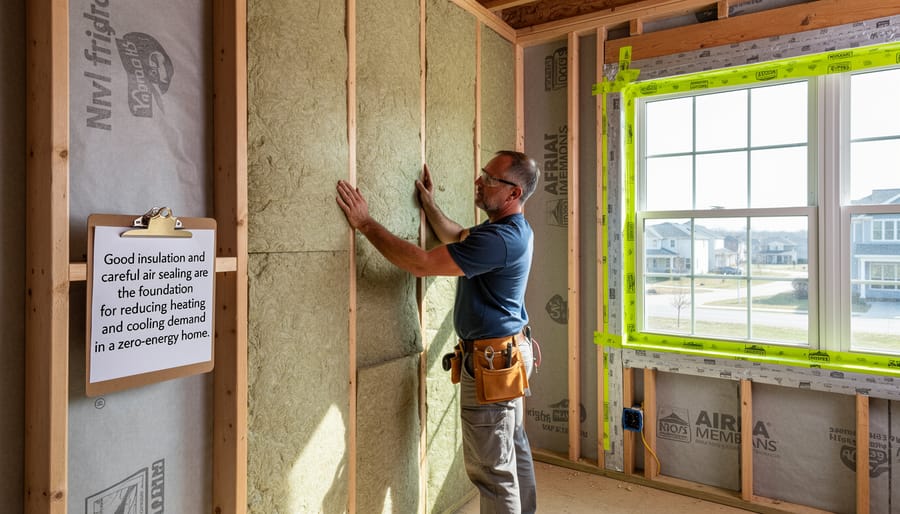
Superior Insulation and Air Sealing
Think of insulation and air sealing as your home’s winter coat and windbreaker combined. Colorado’s climate zones range from mild Front Range winters to brutal mountain cold, and your insulation needs to match. Without proper insulation and airtight construction, even the best solar panels won’t help you reach zero energy because you’ll be hemorrhaging heat through gaps and poorly insulated surfaces.
Advanced insulation materials outperform the fiberglass batts found in older Colorado homes. Spray foam insulation creates both an air barrier and insulation layer simultaneously, making it ideal for irregular spaces and rim joists. Rigid foam boards excel on exterior walls and basement foundations where moisture resistance matters. Dense-packed cellulose, made from recycled paper, offers excellent performance in walls and attics while being more affordable than spray foam.
| Component | Minimum R-Value | High-Performance Target |
|---|---|---|
| Attic/Ceiling | R-49 | R-60+ |
| Walls | R-21 | R-30+ |
| Basement Walls | R-15 | R-20+ |
| Crawlspace | R-19 | R-25+ |
Higher R-values are essential in mountain communities above 7,000 feet, where winter temperatures routinely drop below zero. Front Range homes can often work with the minimum targets, but reaching the high-performance range makes zero energy far more achievable.
Air sealing matters just as much as R-value. Homes leak air around electrical boxes, plumbing penetrations, attic hatches, and where walls meet foundations. Professional blower door testing identifies these leaks, and sealing them with caulk, spray foam, and weatherstripping can reduce heating loads by 20-30%. In Colorado’s dry climate, proper air sealing also helps maintain indoor humidity during winter without compromising energy performance.
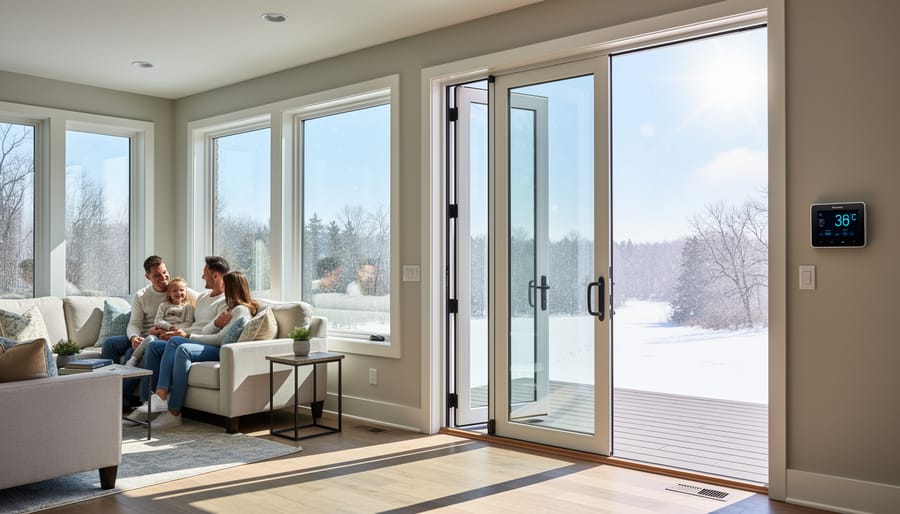
High-Performance Windows and Doors
Windows and doors represent some of the biggest opportunities for energy loss in any home, which is why high-performance options are essential for zero energy goals. In Colorado, where temperature swings can be dramatic and sunshine is abundant, the right windows actually become energy assets rather than liabilities.
Triple-pane windows with low-emissivity (low-E) coatings are the standard for zero energy homes. These windows trap insulating air or gas between the panes while the low-E coating reflects heat back into your home during winter and blocks it during summer. For Colorado’s climate, look for windows with U-factors below 0.25 and solar heat gain coefficients (SHGC) that match your specific needs, higher SHGC on south-facing windows captures winter warmth, while lower SHGC on west-facing windows prevents summer overheating.
Proper orientation makes a measurable difference. South-facing windows can provide free passive heating during Colorado’s cold but sunny winters, potentially reducing your heating load by 20-30%. Strategic overhangs or awnings prevent that same sun from overheating your home come July.
Energy-efficient doors matter too, though they’re often overlooked. Insulated steel or fiberglass doors with compression weatherstripping and thermal breaks prevent the air leakage that undermines your envelope. Pay special attention to garage doors if your garage shares walls with living space, an insulated garage door can prevent significant heat transfer.
Energy-Efficient Mechanical Systems
Choosing the right mechanical systems can cut your heating and cooling costs by 40-50% compared to standard equipment, a crucial step toward zero energy.
Start with heating and cooling, your home’s biggest energy users. Air-source heat pumps have become the go-to choice for Colorado homes, efficiently moving heat rather than generating it. Modern cold-climate heat pumps maintain performance even at -13°F, handling most Front Range winter conditions without backup heat. They deliver 300-400% efficiency (meaning three to four units of heat for every unit of electricity), far outpacing traditional furnaces. For mountain properties where temperatures regularly drop below zero, dual-fuel systems pair a heat pump with a high-efficiency furnace that kicks in only during extreme cold.
Your ventilation system matters more than most homeowners realize. A tightly sealed zero energy home needs controlled fresh air exchange. Energy recovery ventilators (ERVs) solve this by pulling in fresh outside air while capturing heat and moisture from outgoing stale air. In Denver’s dry climate, an ERV prevents your home from becoming uncomfortably arid in winter while maintaining energy efficiency. Look for models with 70% or higher recovery efficiency.
Water heating accounts for roughly 18% of home energy use. Heat pump water heaters extract warmth from surrounding air to heat water, using 60% less energy than standard electric models. They work well in basements or mechanical rooms where they’ll also help with dehumidification. For homes with solar panels, these units can heat water during peak sun hours, effectively storing solar energy as hot water for evening use.
Proper sizing is critical, oversized systems waste energy cycling on and off, while undersized systems run constantly. A qualified contractor should perform detailed load calculations specific to your home’s envelope performance before recommending equipment.
Renewable Energy Generation
Solar panels are the cornerstone of zero energy homes in Colorado, and for good reason. With over 300 days of sunshine annually across most of the state, photovoltaic systems can generate substantial electricity year-round. The key is sizing your system to match your home’s annual consumption, not just your peak summer usage.
A typical Colorado home that’s been optimized for efficiency through the first three pillars might need a 6-10 kilowatt solar array to achieve zero energy status. Your specific system size depends on your home’s energy consumption after efficiency improvements, roof orientation and pitch, available unshaded roof space, and local weather patterns. South-facing roofs with minimal shade offer the best production, though east and west orientations can work with slightly larger systems.
System sizing requires careful calculation. An energy audit provides your baseline consumption, then you factor in efficiency upgrades you’ve made. Your solar installer can model expected production based on your roof characteristics and local solar irradiance data. The goal is annual production that matches or slightly exceeds annual consumption, accounting for Colorado’s seasonal variations where summer panels overproduce and winter underproduces.
While solar dominates the renewable energy conversation, Colorado homeowners have other options worth considering. Small wind turbines work in consistently windy rural locations, particularly on the eastern plains. Ground-source heat pumps, though not technically renewable generation, dramatically reduce heating and cooling energy needs by tapping stable underground temperatures.
For most Colorado homeowners pursuing zero energy, a properly sized solar array paired with net metering through your utility creates the most practical and cost-effective path to eliminating annual energy costs.
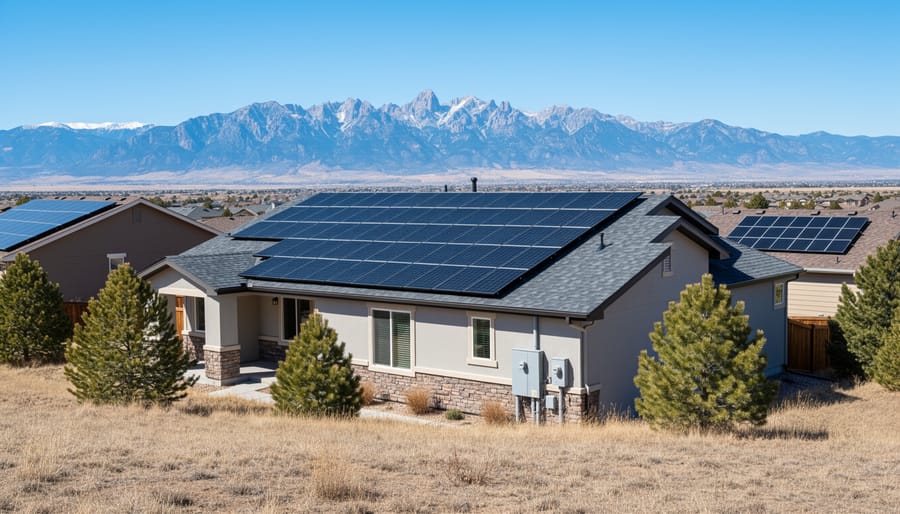
Steps to Achieve Zero Energy in Your Colorado Home
Achieving zero energy in your home isn’t about making every change at once. It’s a sequential process where each step builds on the last, and efficiency always comes before generation.
The biggest mistake homeowners make is jumping straight to solar panels. Installing renewable energy on an inefficient home means you’ll need a larger, more expensive system to compensate for energy you’re wasting. Think of it like trying to fill a bathtub with the drain open, you need to plug the holes first.
Here’s the proven path to zero energy:
- Start with a professional energy audit. A comprehensive audit identifies exactly where your home loses energy and which improvements will deliver the biggest impact. For Colorado homes, this typically reveals air leakage around windows and doors, inadequate attic insulation, and ductwork issues. The audit creates your customized roadmap and ensures you spend money where it matters most.
- Seal air leaks and upgrade insulation. Address the envelope first. Seal gaps around windows, doors, outlets, and penetrations. Boost attic insulation to at least R-49 for Colorado’s Front Range (R-60 for mountain areas). Insulate basement walls and crawl spaces. These unglamorous improvements often cut energy use by 30-40% and cost far less than mechanical upgrades.
- Upgrade to high-efficiency systems. Replace aging HVAC equipment with properly-sized heat pumps or high-efficiency furnaces. Install an energy recovery ventilator to maintain air quality while minimizing heat loss. Upgrade to a heat pump water heater. Choose ENERGY STAR appliances when replacements are needed. Right-sizing matters, an efficient home needs smaller equipment than before.
- Optimize your energy use patterns. Install a programmable or smart thermostat. Switch to LED lighting throughout. Identify and eliminate phantom loads from devices that draw power when off. Monitor your consumption to understand your actual energy needs before sizing solar.
- Size and install your solar system. Only now should you add renewable generation. Your energy audit and efficiency upgrades have dramatically reduced consumption, so you’ll need fewer panels than you would have initially. Work with a qualified solar installer to design a system that matches your actual post-efficiency usage, accounting for Colorado’s seasonal variations.
For existing homes, this process typically takes one to three years as you tackle improvements in phases. Budget constraints, contractor availability, and seasonal considerations all affect timing. That’s perfectly fine. Each step delivers immediate savings while moving you closer to zero energy.
New construction offers a unique advantage. You can integrate all elements from the start, which costs 10-15% less than retrofitting and achieves better performance. If you’re building, work with architects and builders experienced in zero energy design from day one.
What It Costs (And What You’ll Save)
Let’s talk numbers, because everyone wants to know: what will this actually cost?
For a complete zero energy retrofit of an existing Colorado home, you’re typically looking at $40,000 to $100,000 or more, depending on your home’s size and current condition. A 2,000-square-foot home might need $15,000 to $25,000 for insulation and air sealing, another $12,000 to $18,000 for new windows, $8,000 to $15,000 for a high-efficiency heat pump, and $20,000 to $35,000 for solar panels after incentives. Older homes with dated systems will naturally cost more than newer homes that already have decent insulation and windows.
Building zero energy from scratch is easier on the wallet, percentage-wise. Expect to add roughly 5% to 10% to new construction costs compared to a code-built home. For a $500,000 home, that’s $25,000 to $50,000 extra upfront, which buys you decades of minimal energy bills.
Here’s where it gets better: Colorado homeowners in 2026 can tap into substantial incentives. The federal residential clean energy credit covers 30% of solar installation costs through 2032. Xcel Energy offers rebates up to $6,000 for heat pumps and additional incentives for insulation and air sealing. Many Colorado utilities provide net metering, meaning your solar system earns credits when it produces more than you use. Stack these programs together, and you can slash your out-of-pocket costs by $15,000 to $30,000.
Payback periods vary, but most Colorado homeowners see their investment returned in 8 to 15 years through eliminated energy bills. If your current energy costs run $200 monthly, that’s $2,400 annually you’ll stop paying. Over 25 years, a typical solar panel lifespan, you’re saving $60,000 at today’s rates. Energy prices historically rise 3% to 5% yearly, so your actual savings will likely exceed that figure considerably.
The real value extends beyond payback calculations. You’ve locked in energy independence, increased your home’s resale value (studies show buyers pay premiums for zero energy homes), and insulated yourself from utility rate hikes for decades.
Start with a professional energy audit to identify your home’s specific needs and create an accurate budget. Every home is different, and knowing exactly where you stand eliminates expensive guesswork.
Common Challenges in Colorado (And How to Solve Them)
Colorado homeowners face unique hurdles when pursuing zero energy, but every challenge has a workable solution.
Mountain heating demands top the list. Homes at higher elevations deal with colder winters and greater temperature swings, which means heating loads that can dwarf those in Denver or Boulder. The fix starts with exceptional insulation, aim for R-60 in attics and R-30+ in walls if you’re above 8,000 feet. Pair that with a cold-climate heat pump rated for Colorado’s sub-zero temperatures (models now work efficiently down to -15°F), and supplement with a backup heating source for extreme cold snaps. Passive solar design also helps: south-facing windows with proper overhangs capture free winter heat while thermal mass floors absorb and release it overnight.
Older home stock presents different obstacles. Denver’s beautiful bungalows and historic neighborhoods weren’t built with energy efficiency in mind. Retrofitting these homes requires creativity, dense-pack cellulose can fill wall cavities without major demolition, spray foam in rim joists and crawlspaces tackles the worst air leaks, and adding exterior rigid foam during re-siding projects boosts wall R-values without sacrificing interior space.
HOA restrictions frustrate many homeowners with perfect solar exposure. If your HOA balks at rooftop panels, explore these alternatives: present data showing solar increases property values (studies show 4-6% gains), propose less-visible mounting locations like south-facing garages or backyard ground mounts, or join forces with neighbors to petition for rule changes, Colorado law actually limits HOA authority to prohibit solar in many cases.
Seasonal production swings mean your panels generate far more in summer than winter. Net metering solves this by banking summer excess to offset winter consumption. Most Colorado utilities offer net metering, though policies vary. Battery storage provides another option but adds significant cost, for most homeowners, grid connection with net metering remains the most practical approach for balancing annual production with consumption.
Is Zero Energy Right for Your Home?
Zero energy isn’t the right goal for every home, and that’s okay. The real question is whether it makes financial and practical sense for your specific situation.
Your home is an ideal candidate if you’re planning to stay put for at least 10 to 15 years, giving you time to recoup your investment through energy savings. Newer homes built after 2000 typically need fewer efficiency upgrades before adding solar, making the path to zero energy more straightforward and affordable. Excellent solar access matters too: if your roof faces south or west with minimal shading from trees or neighboring buildings, you’ll generate more power with fewer panels.
Before committing to zero energy, honestly assess these factors:
- Roof condition and orientation: Is your roof in good shape with 15+ years of life remaining, and does it face south or west?
- Available budget: Can you invest $30,000 to $60,000 upfront, or access favorable financing options?
- Length of homeownership plans: Will you own this home long enough to see returns on your investment?
- Current energy bills: Are you spending $150+ monthly, indicating significant savings potential?
- Local solar potential: Does your property receive unobstructed sunlight for most of the day?
If some factors don’t align, consider near-zero energy or high-efficiency as your target instead. Older homes in Denver’s historic neighborhoods, for instance, might achieve 70 to 80 percent energy reduction more cost-effectively than full zero energy. Homeowners with significant tree cover might prioritize efficiency upgrades that deliver immediate comfort and savings without requiring perfect solar conditions.
The best approach starts with a professional energy audit to understand your home’s current performance and identify the most cost-effective improvements for your situation, whether that’s zero energy or another ambitious efficiency goal.
Achieving zero energy isn’t just a lofty goal, it’s a realistic target for Colorado homeowners. With our state’s abundant sunshine, supportive incentives, and growing expertise in energy-efficient building practices, you’re already starting from an advantageous position. Whether you’re building new or transforming an existing home, the path to eliminating your energy bills begins with understanding exactly where your home stands today.
That’s why a professional energy audit is your essential first step. Rather than guessing which improvements will deliver the biggest impact, an audit pinpoints your home’s specific inefficiencies, the air leaks draining your heating dollars, the insulation gaps letting conditioned air escape, the systems working harder than they should. This data-driven approach lets you prioritize investments strategically, tackling the most cost-effective upgrades first and building toward zero energy systematically.
At Denver Home Energy, we’ve guided hundreds of Colorado homeowners through this transformation. Our team combines deep local knowledge with hands-on expertise in the insulation, air sealing, and energy systems that form the foundation of zero energy homes. We understand Colorado’s climate challenges and know which solutions work best in our unique conditions.
The benefits extend far beyond your monthly utility statement. You’ll enjoy superior comfort year-round, increase your home’s value, reduce your environmental footprint, and gain energy independence that protects you from future rate increases. Zero energy represents an investment in your home’s future and our state’s sustainable energy goals, and it starts with one conversation about what’s possible for your specific property.