
Denver homeowners researching solar panels face a unique decision matrix shaped by our high-altitude climate, 300 days of annual sunshine, and extreme temperature swings. Understanding which solar panel brands and models perform best in these specific conditions can mean the difference between a system that merely functions and one that maximizes your energy savings for decades.
The solar market offers three distinct tiers of panel options, each suited to different budgets and performance expectations. Premium brands like SunPower and Panasonic deliver efficiency ratings exceeding 22%, making them ideal for homes with limited roof space or those seeking maximum output during Denver’s intense summer sun and snowy winters. Mid-tier options from manufacturers like Q CELLS and Canadian Solar provide excellent value, balancing 19-21% efficiency with competitive pricing that appeals to most Colorado homeowners. Budget-friendly panels from brands like Trina and JA Solar offer entry points into solar ownership, though with slightly lower efficiency ratings around 17-19%.
Denver’s climate demands special consideration beyond simple efficiency numbers. Our dramatic temperature fluctuations require panels with low temperature coefficients to maintain performance during hot summer afternoons when many systems lose efficiency. Heavy snow loads necessitate durable frames and high build quality. Meanwhile, our exceptional solar irradiance means even standard-efficiency panels can generate impressive energy production.
This guide breaks down the specific models available in Denver’s market, comparing performance characteristics that matter most for Colorado conditions, helping you make an informed investment in your home’s energy future.
Why Denver’s Climate Makes Solar Panels a Smart Investment
Denver’s unique geography and climate create ideal conditions for solar energy production that many homeowners don’t fully appreciate. While some people assume cold winters mean less solar efficiency, the reality is quite different. Our city’s high elevation and crisp, clear air actually enhance solar panel performance in ways that offset cooler temperatures.
The Mile High City boasts an impressive 300 days of sunshine annually, giving your panels consistent opportunities to generate electricity throughout the year. At 5,280 feet above sea level, there’s less atmosphere between your panels and the sun, meaning solar radiation reaches your roof with greater intensity. In fact, solar panels often perform better in cooler temperatures because excessive heat can reduce efficiency. Those sunny winter days when snow reflects additional light onto your panels? That’s bonus energy production right there.
Beyond natural advantages, Colorado offers compelling financial reasons to go solar:
- Abundant sunshine averaging 300 days per year with high-altitude intensity
- Cooler temperatures that improve panel efficiency compared to hot climates
- State tax credits reducing installation costs significantly
- Utility rebate programs from Xcel Energy and local providers
The Colorado solar incentives landscape makes the investment even more attractive. When you combine federal tax credits with state programs and utility rebates, you’re looking at substantial upfront savings. Many Denver homeowners find their payback period in Colorado ranges from 7 to 12 years, depending on system size and energy usage.
The bottom line? Denver’s climate isn’t just suitable for solar panels; it’s exceptional. Our combination of high-altitude sunshine, supportive state policies, and decreasing equipment costs creates a perfect storm for energy savings and sustainability.
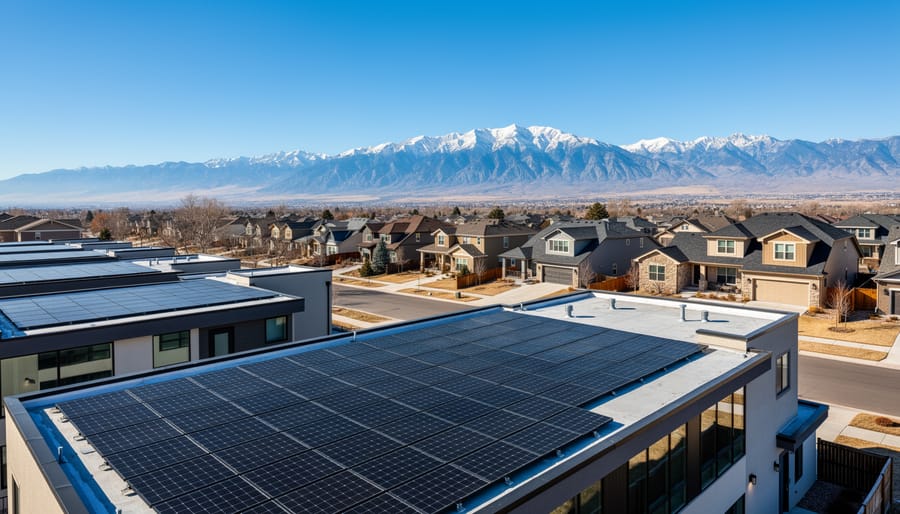
Top Solar Panel Brands for Denver Homes
Premium Tier: Maximum Efficiency Panels
If you’re looking for the absolute best performance and longest-lasting investment in solar panels for your Denver home, premium tier options deliver maximum efficiency and reliability. These top-of-the-line brands excel in Colorado’s unique climate conditions and offer the highest energy production per square foot of roof space.
SunPower leads the premium category with efficiency ratings reaching up to 22.8%, making them the most efficient residential solar panels available today. Their Maxeon cell technology is specifically designed to handle temperature fluctuations and performs exceptionally well in Denver’s cold winters. LG solar panels, while the company has exited manufacturing, remain an excellent choice through remaining inventory, offering efficiency ratings around 21-22% with superior build quality. Panasonic rounds out the premium tier with their HIT technology panels, achieving efficiency ratings of 21-21.5% while maintaining excellent performance even when covered with light snow.
| Brand | Efficiency Rating | Warranty (Years) | Best For |
|---|---|---|---|
| SunPower Maxeon | 22.2-22.8% | 25 product/25 performance | Limited roof space, maximum output |
| LG NeON | 21-22% | 25 product/25 performance | Premium quality, cold weather performance |
| Panasonic EverVolt | 21-21.5% | 25 product/25 performance | Snow performance, long-term reliability |
These premium panels shine brightest for Denver homeowners with limited roof space who need to maximize energy production from every available square foot. If your home has a smaller south-facing roof area or significant shading issues, the higher efficiency rating translates directly into more power generation and greater cost savings over time. The superior warranty coverage, typically 25 years for both product defects and performance guarantees, provides peace of mind that your investment is protected for decades.
Premium panels also excel in Denver’s snowy conditions thanks to better low-light performance and enhanced temperature coefficients. While all solar panels produce less energy in extreme heat, premium options lose less efficiency when temperatures fluctuate, which matters during those sunny 70-degree January days we enjoy in Colorado.
The higher upfront investment typically ranges from $3.00 to $3.80 per watt installed, but the increased energy production and durability often result in better long-term returns for homeowners planning to stay in their homes for 15 years or more.
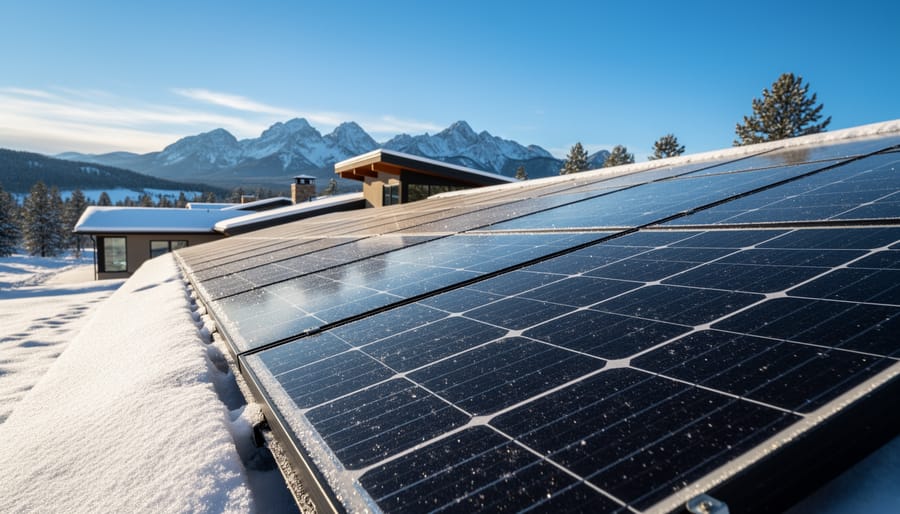
Mid-Range: Best Value for Most Homeowners
For most Denver homeowners, mid-range solar panels offer the sweet spot between affordability and performance. These panels typically cost between $2.50 and $3.20 per watt installed, making them accessible while still delivering reliable energy production for Colorado’s unique climate conditions.
Canadian Solar stands out as one of the most popular choices in Denver installations, and for good reason. This brand consistently delivers solid performance in our variable weather conditions, from intense summer sun to occasional hail storms. Their panels feature robust construction that handles Denver’s temperature swings particularly well, maintaining efficiency even during our coldest winter mornings. Homeowners appreciate that Canadian Solar panels come with strong warranties—typically 25 years for performance and 12 years for product defects—providing peace of mind without the premium price tag.
Silfab has gained significant traction in the Colorado market, partly because their panels are manufactured in North America with strict quality control standards. This mid-tier option performs exceptionally well in high-altitude conditions where UV exposure is more intense than at sea level. Denver homeowners often see excellent energy production from Silfab panels, particularly during our 300-plus days of sunshine annually. The company’s commitment to sustainable manufacturing also resonates with environmentally conscious Colorado residents.
Q CELLS represents another excellent middle-ground option that’s become increasingly common on Denver rooftops. These German-engineered panels excel in low-light conditions, which matters more than you might think. Even in sunny Colorado, morning fog, afternoon clouds, and winter weather can impact solar production. Q CELLS’ anti-reflective coating and advanced cell technology help capture energy even when conditions aren’t perfect, maximizing your cost savings throughout the year.
What makes these mid-range options so popular in Denver? They deliver 85-90 percent of the performance of premium panels at roughly 65-75 percent of the cost. For most homeowners, this value proposition makes perfect sense. You’ll still see significant reductions in your electricity bills and contribute to sustainability goals without overextending your budget. Local solar installers frequently recommend these brands because they’ve proven their reliability in Colorado’s specific climate conditions, combining quality workmanship with practical energy efficiency that makes financial sense for the average household.
Budget-Friendly: Quality Panels at Lower Cost
Not every Colorado homeowner needs top-tier panels to achieve excellent energy savings. Budget-friendly options from manufacturers like Trina Solar and JA Solar deliver reliable performance at 20-30% lower costs than premium brands, making solar accessible to more Denver families seeking energy efficiency without breaking the bank.
Trina Solar has earned a strong reputation for producing dependable panels that balance cost and quality. Their Vertex series typically achieves 19-20% efficiency, which might seem modest compared to premium options, but still generates substantial electricity for most residential needs. JA Solar offers similar performance characteristics with their JAM series, featuring solid warranties and proven durability in varied climates. Both manufacturers have decades of production experience and supply panels to projects worldwide, demonstrating their commitment to quality workmanship even at lower price points.
- Initial investment reduced by several thousand dollars compared to premium panels
- Still includes 25-year performance warranties providing long-term security
- Proven track record with millions of installations across diverse climates
- Generates significant cost savings on electricity bills despite lower efficiency
- Requires 15-20% more roof space to generate the same power output
- Slightly lower efficiency means reduced performance in low-light conditions
- Temperature coefficient may result in marginally higher summer output losses
- Resale value perception may be lower than homes with premium brands
Budget panels make the most sense when you have ample roof space available and your primary goal is maximizing immediate cost savings. If your home features a large, unshaded south-facing roof, the efficiency difference becomes less critical since you can simply install additional panels to meet your energy needs.
The trade-offs are manageable for most situations. While these panels may lose an extra 1-2% efficiency over their lifespan compared to premium options, they still maintain 80-85% of original output after 25 years. Denver’s abundant sunshine means even modest-efficiency panels generate impressive electricity throughout the year.
For Colorado homeowners focused on sustainability and practical returns, budget-tier panels often provide the shortest payback period. The lower upfront investment means you start seeing positive cash flow sooner, even if total lifetime energy production is slightly less than premium alternatives.
Key Features That Matter in Colorado’s Climate
When shopping for solar panels in Denver, you’ll encounter plenty of technical specifications that might seem overwhelming at first. However, understanding a few key features specific to Colorado’s unique climate will help you make a smart investment that performs reliably year-round.
Let’s start with temperature coefficient, which is particularly important for our cold Colorado mornings. This number tells you how well panels perform when temperatures drop. Here’s the thing: solar panels actually work more efficiently in cold weather, but some handle it better than others. Look for panels with a temperature coefficient around -0.30% per degree Celsius or lower. Premium brands like SunPower and REC often achieve -0.29% or better, meaning you’ll generate more power during those crisp winter days when the sun is shining but temperatures hover near freezing.
Snow load ratings matter tremendously in Denver, where we can get heavy, wet snowfalls. Your panels need to withstand the weight without structural damage. Most quality panels are rated for at least 5,400 Pascals (about 113 pounds per square foot), but for Colorado homes, especially in foothills areas, consider panels rated for 7,000 Pascals or higher. This extra capacity provides peace of mind during those occasional massive snowstorms.
Wind resistance is another critical specification. Denver’s location east of the mountains means we experience strong chinook winds and occasional severe weather. Look for panels certified to withstand winds of at least 140 mph. This certification ensures your investment stays securely mounted during intense wind events.
Finally, degradation rate tells you how much efficiency your panels lose each year. Industry average is about 0.5% to 0.8% annually, but top-tier manufacturers offer rates as low as 0.25% per year. Over a 25-year lifespan, this difference significantly impacts your total energy production and cost savings. A panel with 0.25% degradation will still operate at about 94% capacity after 25 years, compared to 80-87% for average panels.
These specifications aren’t just numbers on a spec sheet. They directly affect how much energy you’ll generate and how much money you’ll save throughout your system’s lifetime in Colorado’s demanding climate.
What Denver Homeowners Should Consider Before Choosing
Making the right solar panel choice for your Denver home requires careful evaluation of several key factors. Start by assessing your roof’s condition and orientation. South-facing roofs typically generate the most energy in Denver, but southwest and southeast orientations can also perform well. Before moving forward, ensure your roof has at least 15-20 years of life remaining, as you won’t want to remove and reinstall panels for roof repairs soon after installation.
Shading analysis is particularly crucial in Denver’s urban neighborhoods where mature trees and nearby structures can significantly impact panel performance. Even partial shading during peak sun hours can reduce your system’s output by 20% or more. A reputable installer will conduct a detailed shading study using specialized software to determine your home’s true solar potential throughout the year.
Understanding your energy usage patterns helps right-size your system. Review your past 12 months of utility bills to identify your average consumption and seasonal variations. Denver homeowners often see higher usage in summer for cooling and winter for heating, which influences the optimal system size and configuration.
Financing options in Colorado are particularly attractive, with various federal tax credits, state incentives, and utility rebates available. Compare cash purchases, solar loans, and power purchase agreements to determine which approach offers the best long-term value for your situation. Each option affects your upfront costs, ownership benefits, and overall savings differently.
Finally, installer selection matters tremendously. Request multiple quotes, verify licenses and insurance, check references from local customers, and review warranty terms carefully. The quality of installation directly impacts your system’s performance and longevity, making this decision just as important as choosing the panels themselves.
Making Your Solar Investment Work Harder
Getting the most value from your solar investment goes beyond just choosing the right panels. In Denver, where time-of-use electricity rates can significantly impact your utility bills, pairing your solar system with battery storage allows you to store excess energy generated during the day and use it during peak rate periods in the evening. This strategy can dramatically increase your cost savings, especially as Xcel Energy and other local utilities continue adjusting their rate structures.
Before installing solar panels, consider making your home more energy efficient first. Simple improvements like upgrading insulation, sealing air leaks, and replacing old windows can reduce your overall energy consumption by 20-40%. When your home uses less energy, you’ll need fewer solar panels to meet your electricity needs, lowering your upfront investment while still achieving energy independence.
At Denver Home Energy, we take a holistic approach to maximizing your solar return on investment. Our comprehensive energy audits identify where your home is losing energy and money. We’ll assess your insulation levels, air sealing needs, and overall energy performance to create a customized plan that addresses efficiency gaps before you install solar panels. This approach ensures you’re not generating expensive solar power to heat your attic or cool the outdoors.
By combining energy efficiency improvements with the right solar panel system and potentially battery storage, Denver homeowners can achieve faster payback periods and greater long-term savings. Our local expertise means we understand Colorado’s unique climate challenges and can design solutions that work year-round in our high-altitude environment.
Denver’s abundant sunshine and supportive solar incentives make it one of the most attractive markets for residential solar in the country. With over 300 days of sunshine annually, local homeowners are perfectly positioned to take advantage of clean, renewable energy while dramatically reducing their electricity costs. However, as we’ve explored throughout this guide, there’s no single “best” solar panel for every Denver home. The right choice depends entirely on your unique situation, from available roof space and shading to your budget and long-term energy goals.
If you have limited roof space, premium efficiency panels like SunPower or REC might be worth the investment. Working with a tighter budget? Reliable mid-tier options from manufacturers like Canadian Solar or Trina deliver excellent value without compromising quality. The key is finding the balance that works for your household’s specific needs and financial situation.
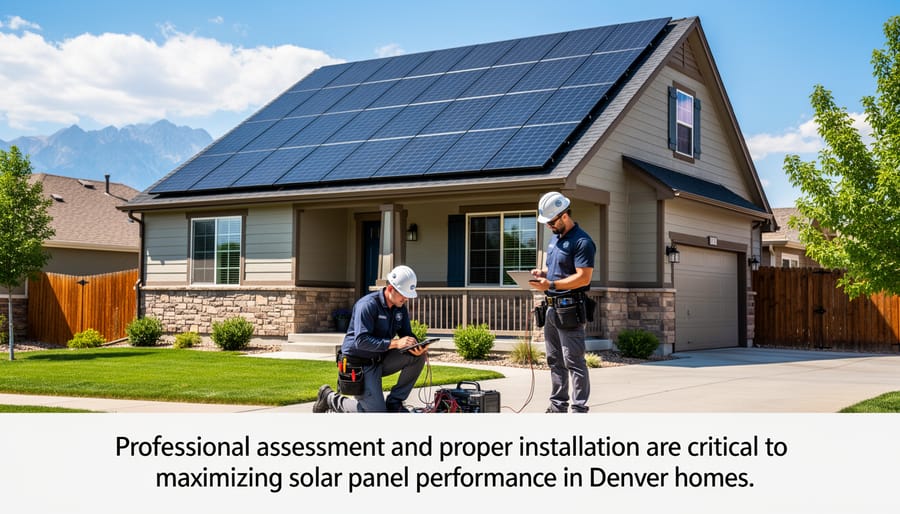
The most important step you can take is scheduling a professional solar assessment. An experienced local installer can evaluate your roof’s orientation, analyze your energy usage patterns, and provide personalized recommendations tailored to Denver’s climate and your goals. This consultation takes the guesswork out of the equation and ensures you’re making an informed investment in your home’s energy future. Ready to explore your solar potential? Reach out to a trusted Colorado solar professional for a comprehensive energy audit today.