
Selling to a cash buyer changes the math on home improvements. Unlike traditional sales where energy efficiency upgrades can boost appraisal values and attract financing-conscious buyers, cash transactions typically close fast, as-is, with minimal inspection contingencies. That doesn’t mean energy upgrades are always pointless, but you need to be strategic about which investments make sense for your timeline and goals.
The truth is that most cash buyers focus on location, structure, and purchase price rather than utility bills. If you’re weeks away from accepting an offer, spending thousands on new windows or insulation probably won’t move the needle. Cash investors often plan their own renovations anyway and won’t pay premium prices for work they’ll redo.
But there are exceptions worth considering. If your home is in decent condition and you’re testing the market before committing to a cash sale, targeted upgrades like air sealing or upgrading to a high-efficiency water heater can reduce monthly costs while you wait. These improvements cost less than major renovations but demonstrate home care to potential buyers. Similarly, if comparable homes in your Colorado neighborhood feature modern HVAC systems or solar panels, a significant efficiency gap might actually lower cash offers.
The decision hinges on three factors: your selling timeline, the condition of competing properties, and whether you’ll benefit from the upgrades if the sale falls through. Much like cash house buyers UK who prioritize quick transactions, American cash buyers rarely delay closings for energy audits or utility bill reviews, so any upgrade must justify itself quickly or provide personal value during your remaining occupancy.
The Cash Buyer Landscape in 2026
Cash buyers in Colorado’s housing market operate differently than traditional purchasers working through mortgage lenders. They’re often investors, house flippers, or individuals with liquid capital who want to close quickly and skip the financing contingencies that slow down conventional sales. In 2026, Colorado’s cash buyer segment has grown more sophisticated, with many buyers running detailed property analyses before making offers.
Most cash buyers evaluate properties through a straightforward lens: acquisition cost plus renovation expenses versus projected resale value or rental income. They’re looking for properties they can either flip profitably within six months or convert into stable rental investments. Location remains paramount, followed by structural integrity and the scope of required repairs. A home needing $50,000 in foundation work will get a significantly lower offer than one needing cosmetic updates, regardless of its energy efficiency.
Energy efficiency enters the equation in subtle ways. Savvy investors recognize that energy-efficient homes command higher rents and resell faster in Colorado’s environmentally conscious market. Properties with upgraded insulation, modern HVAC systems, or solar panels often require less immediate capital investment and appeal to quality-conscious tenants or future buyers. However, most cash buyers discount the value of energy upgrades compared to what homeowners originally paid. A $12,000 insulation project might only add $4,000 to $6,000 in perceived value to a cash offer.
The calculation shifts based on buyer type. Wholesale buyers purchasing for quick flips typically ignore energy efficiency entirely, while buy-and-hold investors consider it more carefully because utility costs affect their long-term returns. Individual cash buyers planning to occupy the home themselves may value efficiency features closer to their actual worth.
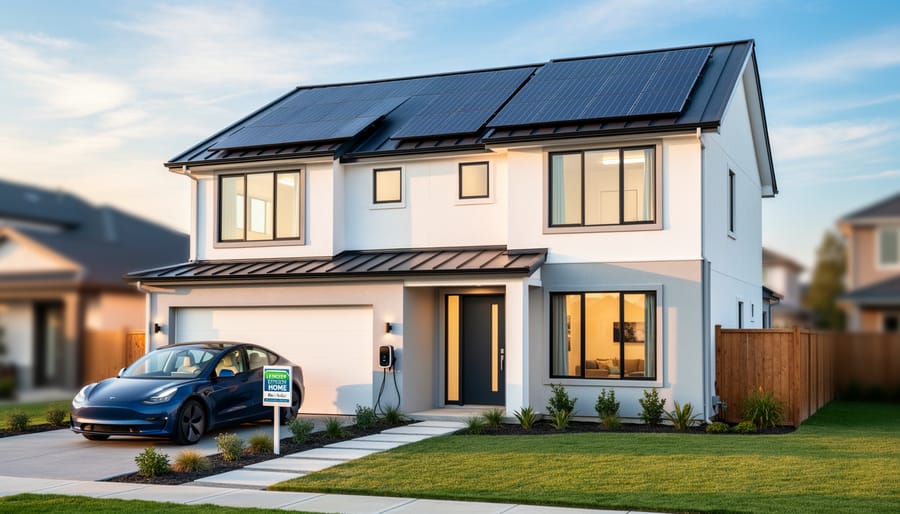
When Energy Upgrades Make Sense Before a Cash Sale
Quick-Return Energy Improvements
Some energy improvements can shift a cash buyer’s number in your favor without derailing your timeline. The sweet spot lies in upgrades that take days rather than weeks and cost hundreds instead of thousands.
Insulation and air sealing top the list for quick returns. Adding attic insulation in a typical Colorado home takes one to two days and costs $1,500 to $3,000. Air sealing gaps around windows, doors, and penetrations runs even less. These improvements reduce heating bills immediately, which matters to cash buyers planning to rent the property or flip it to end users who’ll scrutinize utility costs.
Smart thermostats represent another fast win. Installation takes an hour, costs run $200 to $400 installed, and smart thermostats save roughly 8% on heating and cooling annually. They’re visible upgrades that signal a well-maintained home.
LED lighting throughout the house costs under $300 and takes an afternoon. It’s not glamorous, but it’s tangible proof you’ve kept the property current.
Skip anything requiring permits or extensive labor. The solar panel price might pencil out for long-term owners, but installation timelines clash with quick sales. Same goes for HVAC replacements unless your system is actively failing. If you’re unsure which upgrades make sense for your situation and timeline, the energy audit cost typically pays for itself in targeted recommendations.
Upgrades That Benefit You While You Wait
The timeline between deciding to sell and actually closing can stretch weeks or even months, and you’ll still be paying utility bills during that period. Some energy upgrades pay for themselves partially or fully through immediate savings while you wait.
Upgrading to a programmable or smart thermostat costs $150-$300 and typically cuts heating and cooling bills by 10-15% within the first month. Given Colorado’s temperature swings, this matters during both winter heating season and summer cooling demands.
Air sealing represents another quick win. Professional sealing of gaps around windows, doors, and penetrations costs $300-$600 and reduces drafts immediately. Many homeowners notice comfort improvements within days and see 5-10% lower utility bills starting with the next billing cycle. In Colorado’s climate, where homes shift between heating and cooling modes, eliminating air leaks makes an immediate difference.
Attic insulation upgrades provide returns fast enough to matter even on short timelines. Adding insulation in an underinsulated attic costs $1,500-$2,500 but can reduce heating and cooling costs by 15-20%. If you’re facing three months of winter heating or summer cooling before closing, the savings add up.
If your timeline extends beyond six months and you have good southern exposure, solar rebates and immediate electricity savings might justify installation, though this works only for longer holding periods.
The key is matching upgrade costs to your actual timeline and current utility expenses. Calculate your monthly savings against installation costs to see what makes sense for your situation.
When to Skip Energy Upgrades and Sell As-Is
Sometimes the smartest move is doing nothing at all. If you’re facing a tight timeline, say, relocating for work within weeks or handling an estate sale with pressing deadlines, energy upgrades simply won’t pencil out. The time between starting a project and closing a sale matters more than the potential return when you need cash quickly.
Homes requiring extensive structural repairs present another clear case for selling as-is. If your foundation needs work, the roof is failing, or electrical systems are outdated, cash buyers already expect a discount. Adding new insulation or a heat pump won’t shift their offer significantly because they’re calculating total renovation costs anyway. You’d spend thousands on efficiency improvements that get buried in their larger rehab budget.
Financial constraints make the decision straightforward. When you lack the capital for upfront improvements, taking a slightly lower cash offer beats the stress of financing upgrades you might not recoup. Cash buyers exist precisely for these situations, they’re buying your home’s potential, not its polish.
Market conditions also matter. During seller’s markets with multiple cash offers, competition among buyers can neutralize the impact of missing energy features. Your leverage comes from demand, not upgrades.
Consider the math coldly: if a $3,000 insulation project might boost your offer by $2,000, you’re losing money and time. Cash buyers typically discount improvement costs by 50-70% because they can contract the work cheaper than you can as an individual homeowner.
If any of these scenarios fit, accept that selling as-is isn’t settling, it’s making a financially sound choice for your specific situation.
Energy Efficiency Features Cash Buyers Actually Notice
Not all cash buyers look at energy efficiency the same way. An investor buying to hold and rent sees different value in your upgrades than someone flipping your house in six months. Understanding these perspectives helps you position your home’s energy features effectively.
Investor-landlords prioritize features that reduce ongoing maintenance calls and keep utility complaints low. They want reliable systems that won’t need replacement soon and improvements that make their rental competitive without breaking the budget. A well-insulated attic or new windows aren’t flashy, but they mean fewer emergency HVAC calls and happier tenants who renew leases.
Flippers focus on visible upgrades that photograph well and appeal to retail buyers. They’re less interested in your crawlspace insulation than in a smart thermostat they can showcase or Energy Star appliances that add marketability. If it doesn’t show up in listing photos or inspection reports, it typically won’t move the needle on their offer.
Individual cash buyers purchasing for themselves fall somewhere between these extremes. They notice both the visible and the functional, especially if they plan to live in the home long-term. Colorado’s temperature swings make them particularly attentive to heating and cooling efficiency.
| Feature | Buyer Type | Value Proposition |
|---|---|---|
| Updated insulation and air sealing | Investor-landlords | Lower tenant utility costs, fewer comfort complaints |
| High-efficiency HVAC system | All types | Reduces replacement risk, improves appraisal value |
| Smart thermostat | Flippers and individual buyers | Modern appeal, visible tech upgrade in photos |
| Energy Star windows | Flippers and individual buyers | Curb appeal plus efficiency, strong ROI signal |
| LED lighting throughout | Investor-landlords | Minimal maintenance, immediate cost savings |
Documentation matters across all buyer types. A recent energy audit report or utility bills showing low costs provide concrete proof that your efficiency claims aren’t just talk. These documents carry weight during negotiations because they turn subjective features into measurable value.
The reality is that cash buyers won’t pay retail premiums for energy upgrades the way traditional buyers might. But they will factor these features into their calculations differently based on their business model and timeline.
How to Leverage Energy Efficiency in Negotiations
If you’ve invested in energy upgrades, presenting them effectively can strengthen your negotiating position with cash buyers. The key is documentation that proves value rather than empty claims.
Start by gathering concrete evidence. Energy audit reports from certified professionals carry weight because they show before-and-after comparisons with measurable improvements. Utility bills demonstrating reduced energy costs over several months provide real-world proof of savings. Keep receipts and warranties for major upgrades like HVAC systems, insulation, or windows, showing when work was completed and by whom.
Present this information strategically. Create a simple one-page summary highlighting the three most impactful improvements, their completion dates, and the documented savings or efficiency gains. Cash buyers appreciate clarity. If you hired professionals to fix fireplace inefficiency or upgrade insulation, include contractor names and certifications.
Timing matters. Share this documentation after initial interest but before final offers, giving buyers time to factor improvements into their valuation without overwhelming them during first contact. For investor buyers, emphasize how upgrades reduce their rehab costs. For individual cash buyers planning to occupy the home, focus on immediate comfort and lower utility bills.
Frame the conversation around their goals rather than your investment. Instead of saying “I spent $5,000 on new insulation,” explain “The attic insulation upgrade cut heating costs by 25% last winter, which means lower carrying costs for you.” This approach positions energy improvements as their advantage, making them more likely to value and pay for those enhancements.
Colorado-Specific Considerations
Colorado’s unique geography and climate create distinct energy efficiency considerations that don’t apply in other markets. The state’s dramatic elevation changes, intense sun exposure, and temperature swings mean that what matters in a Denver suburb differs significantly from a mountain property.
Your home’s location within Colorado directly impacts which energy features cash buyers value most:
- Altitude affects HVAC performance and efficiency, with systems working harder at higher elevations
- Heating dominates energy costs statewide, making insulation and air sealing more critical than advanced cooling systems
- Utility rates vary by provider, with mountain communities often facing higher electricity costs than metro areas
- Mountain properties require different upgrades than Front Range homes, prioritizing winter performance over year-round balance
Cash buyers familiar with Colorado real estate understand these regional nuances. An investor purchasing a home in Boulder will notice updated insulation and modern heating systems because they know winter heating costs drive annual energy expenses. In contrast, that same buyer might overlook air conditioning upgrades that would matter in southern states.
The state’s 300 days of sunshine also creates opportunities. Homes with south-facing roof space suitable for solar installations attract particular buyer segments, even if panels aren’t currently installed. Similarly, the semi-arid climate means evaporative cooling systems that would fail elsewhere can be selling points here.
Colorado’s building codes have tightened considerably in recent years, especially along the Front Range. Cash buyers purchasing older homes often factor in potential code compliance costs for future renovations. A home that already meets modern energy standards through recent upgrades can reduce their projected investment, potentially improving your offer.
The decision to invest in energy efficiency upgrades before selling to a cash buyer isn’t binary. Your best path depends on your specific timeline, budget, property condition, and the buyer pool you’re targeting. If you’re facing foreclosure or need to relocate within weeks, selling as-is makes sense. But if you have a few months and high utility bills, strategic upgrades can pay for themselves while you’re still living there and potentially strengthen your negotiating position.
Start by getting a clear picture of your home’s current energy performance. Colorado’s variable climate means inefficiencies show up quickly in utility bills, and documented improvements give you concrete talking points with buyers. Consider which upgrades deliver immediate comfort and savings versus which are purely for resale value, then prioritize accordingly.
The cash buyer market rewards realistic expectations. Some buyers specifically seek energy-efficient properties and will pay premiums for verified improvements. Others focus exclusively on location and structure, viewing energy upgrades as renovation tasks they’ll handle themselves. Understanding your likely buyer type helps you avoid wasting money on improvements that won’t move the needle.
Denver Home Energy offers consultations that assess your home’s energy profile alongside your selling timeline. We’ll help you identify which upgrades make financial sense for your situation and which you can skip, giving you confidence that you’re making informed decisions rather than guessing. Whether you proceed with upgrades or sell as-is, you’ll know you chose the right strategy for your circumstances.