
A professional home energy audit in Colorado typically costs between $400 and $500, but state and utility rebates often reduce that amount significantly or even to zero for qualifying homeowners. If you’ve noticed climbing utility bills or uneven heating and cooling, you’re likely weighing whether this investment makes sense for your home.
The final price depends on several factors, starting with your home’s size and complexity. A 1,200-square-foot ranch requires less time and equipment than a 3,500-square-foot two-story with multiple HVAC zones. The audit scope matters too. A standard assessment with blower door testing and thermal imaging runs less than a comprehensive evaluation that includes duct leakage analysis, combustion safety testing, and detailed modeling of energy use.
Location plays a role as well. Urban homeowners along the Front Range may find more auditors competing for business, which can influence pricing, while those in rural mountain communities might pay extra for travel time. The auditor’s certification level and the technology they use also affect the bottom line. Certified professionals who invest in advanced infrared cameras and computerized analysis tools typically charge more than general contractors offering basic walkthroughs.
Colorado’s commitment to energy efficiency and sustainability means robust rebate programs are available through Xcel Energy, Black Hills Energy, and other utilities, plus state-administered assistance for income-qualified households. Understanding these programs before booking your audit can transform a several-hundred-dollar expense into a fully covered service that launches your path to lower energy bills and a more comfortable home.
What You’ll Pay for a Home Energy Audit in Colorado
After Rebates and Utility Incentives
The audit cost you actually pay is often far lower than the $400-$500 standard valuation, thanks to utility incentives and state programs designed to remove financial barriers. Many Colorado homeowners pay nothing out of pocket when they work with rebates paid through contractors who are registered with the state’s energy programs.
Your effective cost depends on which utility company serves your home and your household income level. Here’s what’s typically available:
- Xcel Energy customers can access audits at significantly reduced rates or free through energy efficiency programs
- Municipal utility providers offer their own incentive structures that lower or eliminate audit fees
- The Colorado Home Energy Rebate Program covers audit costs as part of whole-home upgrade packages for eligible households
- Households earning up to 80% of area median income qualify for 100% cost coverage
The Colorado Home Energy Rebate Program takes a contractor-forward approach that simplifies the process for homeowners. Rather than paying upfront and waiting months for reimbursement, registered contractors apply the rebate as an immediate discount at the time of service. This means the savings show up on your invoice, not as a check you chase down later. If you’re planning larger efficiency upgrades like insulation, air sealing, or electrification projects, the audit often becomes part of a bundled package where eligible homeowners can access up to $14,000 in total rebates.
Cost Breakdown: What’s Included in Your Audit
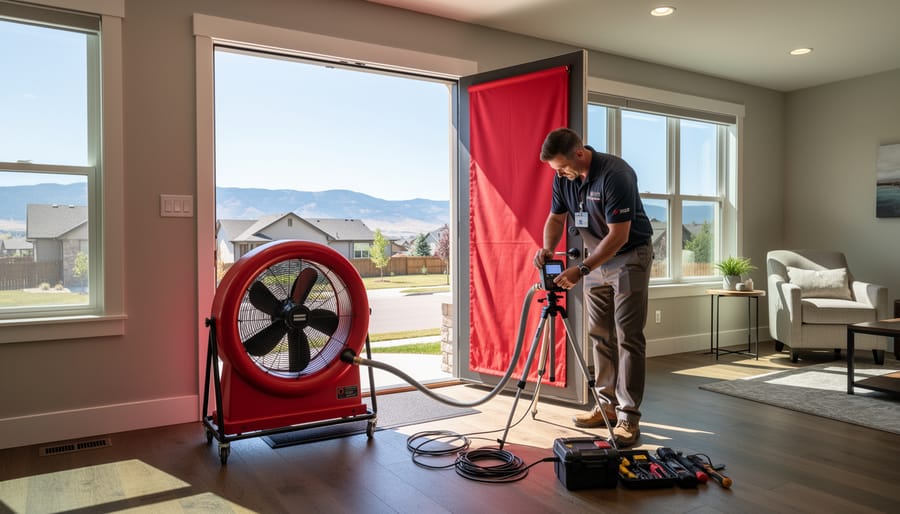
A professional home energy audit delivers far more than a casual walk-through. The $400-$500 valuation reflects specialized equipment, technical expertise, and a comprehensive assessment that identifies exactly where your home loses energy and money. Here’s what you’re actually paying for when you schedule an audit.
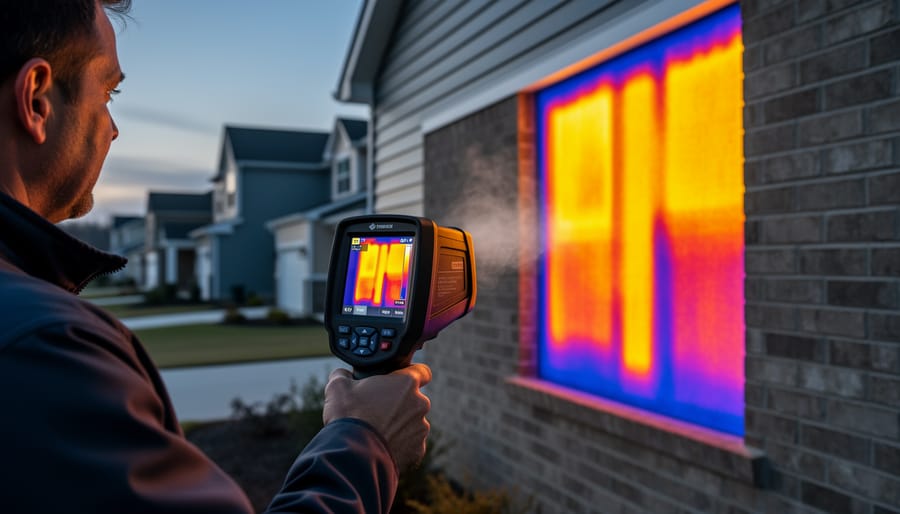
The centerpiece of any thorough assessment is blower door testing. Your auditor seals your home’s exterior openings and uses a calibrated fan to depressurize the building, measuring how much air leaks through cracks, gaps, and hidden penetrations. This quantifies your home’s airtightness with precision you can’t achieve by holding a hand near a window. Thermal imaging follows, using infrared cameras to reveal temperature variations invisible to the naked eye: missing insulation, air bypasses in walls, and thermal bridges that drain heat in winter and overwork your AC in summer.
| Audit Component | What It Measures | Why It Matters for Savings |
|---|---|---|
| Blower Door Testing | Air leakage rate (CFM50) | Quantifies drafts and infiltration that waste conditioned air |
| Thermal Imaging | Temperature variations in walls, ceilings, floors | Reveals hidden insulation gaps and thermal bypasses |
| Combustion Safety Testing | Carbon monoxide levels and appliance backdrafting | Ensures safe operation of furnaces and water heaters |
| HVAC Assessment | System efficiency, duct leakage, airflow | Identifies equipment upgrades and distribution issues |
Combustion safety testing protects your household from carbon monoxide risks while checking that gas appliances vent properly. Your auditor inspects insulation levels in the attic, walls, and crawl space, comparing them to current building science standards for Colorado’s climate. The HVAC assessment evaluates your heating and cooling system’s age, efficiency, and duct integrity, often uncovering 20-30% losses from leaky ductwork in unconditioned spaces.
The appliance evaluation catalogs your water heater, major appliances, and lighting, noting opportunities to swap energy hogs for efficient models. Denver Home Energy’s auditors document all findings in a detailed report with prioritized recommendations, estimated savings for each upgrade, and rebate eligibility for improvements. You’re not just getting a list of problems; you’re receiving a roadmap for strategic investments that cut utility bills and qualify for program incentives. That level of thoroughness and local expertise justifies the valuation and sets the foundation for meaningful energy savings.
Factors That Affect Home Energy Audit Pricing
Your Location Within Colorado
Where you live in Colorado plays a meaningful role in what you’ll pay for a home energy audit. In the Denver metro area and along the Front Range, you’ll find competitive pricing and shorter travel times, which keeps base costs closer to the standard $400-$500 range. The concentration of contractors and higher demand in these areas creates a more predictable pricing environment.
Mountain communities present different economics. Auditors often factor in drive time, weather considerations, and the logistical challenges of reaching properties at higher elevations. While the underlying service remains the same, you might see the upper end of pricing, or slightly above, to account for these realities.
Rural areas across Colorado fall somewhere in between. Travel distances matter, but so does local market competition. In regions with fewer contractors, pricing can vary more. That said, utility rebate programs apply statewide, so your actual out-of-pocket cost depends less on where you live than on your utility provider’s incentive structure and your household income level. A homeowner in Durango accessing the same rebates as someone in Aurora might pay the same effective price, even if the auditor’s base rate differs.
Your Utility Provider
Your utility provider plays a significant role in determining what you’ll actually pay for a home energy audit. In Colorado, major providers like Xcel Energy and Black Hills Energy each run their own incentive programs with different rebate structures and eligibility requirements. Xcel Energy, which serves the Denver metro area and much of the Front Range, typically offers some of the most generous audit incentives, many customers access assessments at substantially reduced rates or no cost through their programs. Black Hills Energy serves southern Colorado communities and offers its own set of energy efficiency programs, though rebate levels and qualification criteria differ from Xcel’s offerings.
Municipal utilities in cities like Fort Collins, Colorado Springs, and Longmont operate independently and set their own rebate policies. These local programs sometimes provide competitive incentives but can vary widely in scope and funding availability. When you contact an auditor, they’ll ask about your utility provider first because that single factor determines which rebate programs you qualify for and how much of the $400-$500 audit cost will be covered. Working with a registered contractor familiar with your specific utility’s requirements ensures you capture every available discount.
Your Household Income Level
Your household income determines how much you’ll actually pay for a home energy audit in Colorado, and it can make the difference between paying nothing versus covering the full cost yourself.
The Colorado Home Energy Rebate Program caps eligibility at 150% of your area median income. If your household falls below this threshold, you qualify for rebates that dramatically reduce audit costs. HEAR AMI eligibility limits vary by county and household size, so a family of four in Denver has a different income ceiling than a couple in rural Colorado.
Here’s where it gets even better for lower-income households: if your income sits at 80% or below the area median income, you qualify for 100% cost coverage. That means a completely free audit, the program covers the entire $400-$500 valuation. These households can also combine electrification upgrades with air sealing and insulation projects for up to $14,000 in total rebates, making the audit a gateway to comprehensive home improvements at no upfront cost.
Income verification happens through your registered contractor when you apply for the program. You’ll need documentation like tax returns or pay stubs to establish eligibility. The rebate discount comes off your bill directly rather than requiring you to pay first and wait for reimbursement, which removes the financial barrier for families who need efficiency upgrades most.
Home Size and Complexity
Home size and square footage naturally affect how long an audit takes. A 1,200-square-foot ranch requires less testing time than a 3,500-square-foot two-story with a finished basement. More rooms mean more outlets to check, more windows to inspect, and more areas where air leakage can occur. Multi-level homes add complexity because auditors need to assess how air moves between floors and identify pressure differences that waste energy.
Homes with complex systems, multiple HVAC zones, radiant floor heating, or older additions, require more thorough evaluation. If your property has a detached garage, workshop, or guest house, those structures extend the assessment scope. Similarly, unusual layouts or accessibility challenges (crawl spaces, attics with limited access) can add time to the appointment.
That said, Colorado’s standardized utility rebate programs minimize price variation. Most utility-sponsored audits maintain consistent pricing regardless of home size because the programs aim to encourage participation. The typical $400-$500 valuation applies broadly, though some contractors may adjust rates for exceptionally large properties or those requiring specialized equipment. When you schedule your audit, ask whether your home’s specific features affect the quote, transparency upfront prevents surprises and ensures you’re getting a thorough assessment that addresses your property’s unique characteristics.
DIY Energy Assessment vs. Professional Audit
You can start evaluating your home’s energy performance without spending a dime. Many Colorado utility companies offer free online assessment tools that walk you through basic checks: identifying drafts around windows and doors, inspecting attic insulation depth, noting thermostat settings, and reviewing your energy bills for usage patterns. These DIY walkthroughs take about an hour and can highlight obvious problem areas like missing weatherstripping or inadequate insulation in accessible spaces.
However, the difference between what you can spot on your own and what a professional audit reveals is substantial. A trained auditor arrives with diagnostic equipment you can’t replicate at home: a blower door that quantifies exactly how much air is leaking from your house, a thermal imaging camera that sees hidden insulation gaps inside walls, and combustion analyzers that check whether your furnace or water heater is operating safely. These tools turn guesswork into measurable data. You might notice your bedroom feels cold, but the auditor’s infrared camera shows you precisely where the insulation is missing behind the drywall and how severe the heat loss is.
Pros of DIY Assessment
- Completely free and can be done immediately using utility company tools.
- Helps you identify obvious issues like visible drafts and inadequate attic insulation.
- Useful for basic energy awareness and low-cost fixes you can tackle yourself.
Cons of DIY Assessment
- Cannot measure air leakage rates, thermal bridging, or other hidden efficiency problems.
- Does not qualify you for Colorado Home Energy Rebate Program or utility incentives.
- Lacks the diagnostic precision needed to prioritize upgrades or calculate potential savings.
- Misses safety issues like combustion appliance backdrafting that require specialized testing.
The practical limitation is that only a professional audit makes you eligible for Colorado’s rebate programs. If you’re planning major upgrades like insulation, air sealing, or new HVAC equipment, the professional assessment becomes the required first step to access those incentives. The detailed report you receive documents baseline conditions and projected energy savings, which contractors and rebate administrators need to process your applications. A DIY checklist might help you weatherstrip a door, but it won’t unlock the pathway to thousands of dollars in rebates for comprehensive home improvements.
Maximizing Your Audit Value Through Rebate Programs
Your energy audit isn’t just a report, it’s your roadmap to unlocking Colorado’s most valuable efficiency incentives. When you schedule through a registered contractor participating in the Colorado Home Energy Rebate Program, you position yourself to receive rebate discounts upfront, turning what could be a $10,000+ home improvement project into something far more affordable.
The process is designed to make the $400-$500 audit cost look like pocket change compared to what you’ll save on upgrades. Here’s how it works:
- Schedule your audit through a Colorado Energy Office registered contractor like Denver Home Energy who can navigate the rebate landscape for you.
- Receive your comprehensive assessment identifying exactly which improvements qualify for rebates and how much you’ll save.
- Review rebate-eligible upgrades, your auditor will show you which combinations maximize incentives, such as pairing heat pump installation with air sealing work.
- Confirm your income qualifications with your contractor; households earning up to 150% of area median income are eligible, and those at 80% AMI can have 100% of costs covered.
- Implement improvements with rebate discounts applied directly at the point of sale, you never pay the full cost upfront and wait for reimbursement.
The real value comes from strategic bundling. Low- and moderate-income households can combine electrification projects (heat pumps, electric water heaters, induction stoves) with insulation and air sealing work to reach up to $14,000 combined rebates. That coverage can transform a drafty, inefficient home into a comfortable, low-cost space to heat and cool.
Your audit identifies where these upgrades will have the biggest impact, quantifying potential savings so you can prioritize projects that deliver the fastest payback. Without that professional assessment, you’re essentially guessing at what will work, and likely missing out on rebate opportunities you didn’t know existed.
What to Expect During Your Energy Audit
A professional home energy audit with Denver Home Energy takes two to three hours from start to finish. You’ll want to clear access to key areas before the auditor arrives, think attic entrances, furnace rooms, and electrical panels. Make sure all areas of your home are accessible, and plan to be present to answer questions about comfort issues or specific concerns you’ve noticed.
The auditor begins with a walkthrough, asking about drafts, cold spots, high bills, or rooms that never seem comfortable. This conversation helps pinpoint problem areas before any testing begins. Next comes the diagnostic equipment. A blower door test depressurizes your home to measure air leakage, you’ll see exactly where conditioned air escapes. Thermal imaging reveals hidden insulation gaps and air infiltration paths that aren’t visible to the naked eye. The auditor also checks combustion appliances for safety, inspects insulation levels throughout the home, and evaluates your HVAC system’s efficiency.
Colorado’s high-altitude climate and temperature swings demand specific expertise. Denver Home Energy’s auditors understand how mountain weather, older construction methods, and local building codes affect home performance. They look for issues common to Front Range homes that generic audits might miss.
Within a few days, you’ll receive a detailed report ranking improvements by cost-effectiveness and potential energy savings. The report outlines which upgrades qualify for Colorado Home Energy Rebate Program incentives, helping you prioritize projects that deliver the best return while reducing your environmental footprint.
Frequently Asked Questions
What will I actually pay for a home energy audit in Colorado?
While audits are typically valued at $400 to $500, most Colorado homeowners pay significantly less or nothing through utility provider programs and state rebates. Your actual cost depends on your utility company and household income level.
Do I qualify for Colorado Home Energy Rebate Program discounts?
The program is available to households that don’t exceed 150% of the area median income for your region. Households at 80% AMI or below qualify for 100% of their costs to be covered, including the audit itself.
Which utility companies offer audit programs?
The cost and availability vary by utility provider across Colorado. Xcel Energy, Black Hills Energy, and many municipal utilities offer programs, though specific rebate levels differ by provider.
Do I need an audit to qualify for insulation or equipment rebates?
Yes, registered contractors work through the Colorado Home Energy Rebate Program and pass rebate savings directly to you as discounts. The audit establishes baseline conditions and qualifies your home for improvement rebates.
How long does an energy audit take?
A comprehensive professional audit typically takes 2 to 3 hours, depending on your home’s size and complexity. You’ll receive a detailed report afterward outlining recommended improvements and potential savings.
What should I do to prepare for my audit appointment?
Clear access to your attic, basement, and mechanical equipment areas. Have recent utility bills available, and be ready to discuss comfort issues or specific concerns about drafts, cold spots, or high energy costs in certain rooms.
Understanding these practical details helps you move forward confidently. The audit process is straightforward, and working with experienced contractors who know Colorado’s rebate landscape ensures you maximize available incentives. Once you receive your audit report, you’ll have a clear roadmap for improvements prioritized by cost-effectiveness and eligible rebate amounts, making it easier to plan your next steps toward a more energy-efficient home.

While professional home energy audits in Colorado are typically valued at $400 to $500, that’s rarely what homeowners actually pay. Thanks to utility programs and the Colorado Home Energy Rebate Program, most residents pay significantly less, and many qualify for audits at no cost. If your household income falls at or below 80% of area median income, your audit and related improvements can be fully covered. Those earning up to 150% AMI still qualify for substantial rebates that reduce upfront costs.
The audit itself is just the beginning. It’s the essential first step that unlocks access to larger rebates, up to $14,000 for combined electrification and weatherization projects, and positions your home for meaningful energy savings and a smaller carbon footprint. Rather than guessing where to invest, you’ll have data-driven recommendations that prioritize impact.
Denver Home Energy specializes in navigating these rebate programs and conducting thorough assessments that translate into real improvements. Our local expertise ensures you understand your options, maximize available incentives, and take confident next steps toward a more efficient, comfortable home. The cost of an audit quickly pays for itself when it guides you toward upgrades that deliver lasting value.