
Solar panels aren’t priced per square foot. They’re priced per watt, and in 2026 the national average installed cost runs about $2.75 to $3.25 per watt. Most U.S. homeowners pay between $15,000 and $40,000 for a full installation, and a 6kW system for a 1,500 square foot home averages around $18,180.
So why does the per-square-foot question come up so often? It’s a familiar yardstick, and it makes sense to want one. The trick is translating it. Your roof space determines how many panels fit, panel count sets your system size in watts, and system size drives the final price.
A few things push that number up or down. System size matters most, since a larger array costs more in total even when the price per watt drops. Equipment quality, roof layout, and installation complexity all play a role too. Quality workmanship counts for a lot here, because a well-installed system keeps producing and saving you money for decades.
Here in Colorado, local factors shape the final bill, and current 2026 Colorado market rates aren’t something we can quote with confidence, so we won’t guess. What we can do is walk you through how the math works, step by step, so you can estimate your own project and ask installers the right questions.
Why Solar Is Priced Per Watt, Not Per Square Foot
If you’ve been searching for a price per square foot, here’s the catch: installers almost never quote that way. Solar is priced by system size, measured in watts (or kilowatts, where 1 kW equals 1,000 watts). That’s because the watts a system can produce, not the roof space it covers, determine how much energy you get and what the equipment costs.
Part of the confusion comes from two very different measurements. The square footage of your home tells you how much living space you have. The square footage of your roof, or the area your panels cover, is a separate number, and neither one directly sets the price. Two homes of the same size can need very different systems depending on how much electricity each family uses, how much sun the roof gets, and how efficient the panels are.
So the most reliable way to estimate cost is simple: multiply your system size by the cost per watt. For 2026, pricing runs about $2.80 to $3.20 per watt before incentives, and 2026 per-watt solar costs put the national average around $2.75 to $3.25 per watt. A 6kW system (6,000 watts), for example, lands near $18,180 for a 1,500 sq. ft. home.
Notice that we haven’t invented a per-square-foot figure. Any single number you see online would be a rough conversion at best, and it could easily mislead you. Roof area still matters, but mainly as a limit: it decides how many panels physically fit.
Once you know your target system size, the per-watt math gives you a solid starting point before a local quote.
What Solar Costs by System Size: A Quick Pricing Snapshot
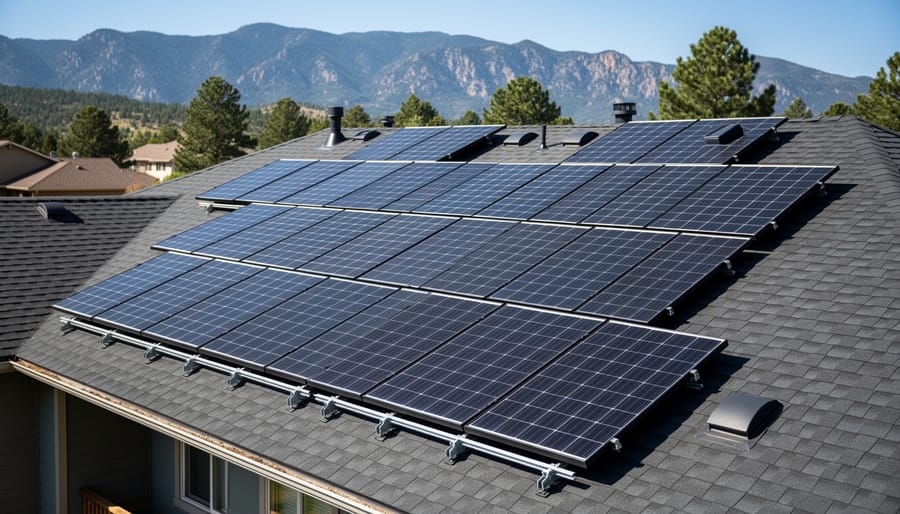
Before you start pricing panels by the square foot, it helps to see what the numbers look like by system size. Size, measured in watts, is the real driver of your quote. The figures below are national 2026 ranges, so use them as a starting point rather than a final price.
| Metric | Value | What it covers |
|---|---|---|
| Full installation range | $15,000, $40,000 | What most U.S. homeowners pay in 2026 |
| National average per watt | $2.75, $3.25 | Typical installed cost per watt |
| Per watt before incentives | $2.80, $3.20 | Price before any incentives are applied |
| 6kW system, 1,500 sq. ft. home | About $18,180 | National average for that system size |
| Typical home system | $25,000, $30,500 | Average cost for a typical home installation |
| California per watt | $2.50, $3.60 | Regional comparison point |
| California typical home | $18,000, $30,000 | Before incentives |
Notice that the sources don’t land on one single number. One analysis puts equipment at around $3.33 per watt, a bit higher than the $2.75, $3.25 national average. That gap comes down to methodology: what each study counts, how it defines a “typical” system, and which installs it samples. Neither is wrong. They’re just measuring slightly different things.
The 6kW example is a handy anchor. At about $18,180 for a 1,500 square foot home, it shows how a modest system sits at the lower end of the full range, while larger homes with higher energy use push toward the upper end. The $25,000, $30,500 figure reflects a more typical, larger home system.
California is a useful comparison because it’s a mature solar market, and its per-watt range ($2.50, $3.60) overlaps closely with the national numbers. That’s reassuring, but it isn’t a Colorado price. Colorado-specific 2026 market rates should be confirmed with a local quote, since your roof, your utility, and your energy use all shape the final number.
Where Your Solar Dollars Go: A Cost Breakdown
When you look at a solar quote, the total can feel like one big number. It helps to know what’s inside it. A typical installation is built from a handful of cost buckets, and each one plays a role in how well your system performs for years to come.
Here’s the simple version of where the money goes:
- Equipment: the solar panels, inverters that turn sunlight’s output into usable household power, and the racking that holds everything on your roof.
- Installation labor: the skilled crew time to mount, wire, and connect the system safely.
- Permitting and paperwork: local permits, inspections, and the utility interconnection steps that make your system legal and grid-ready.
- Optional battery storage: an add-on that stores extra power for evenings or outages, which raises the upfront price.
Beyond these, you’ll find smaller soft costs, like project design, site evaluation, and overhead. We won’t put percentages on each slice, since they vary from one installer and home to the next. What matters is that the full picture sits inside that national range of roughly $2.75 to $3.25 per watt.
This is where quality workmanship pays off. A tidy, well-sealed, properly wired installation protects your roof, keeps production steady, and safeguards your cost savings over the long haul. Cutting corners to shave a few dollars off the quote can cost far more down the road.
Before you decide what to include, a smart first step is understanding your home’s energy use. Knowing the typical home energy audit cost can help you see how right-sizing your system might trim your bill. From there, you can choose the right system for your roof and budget, and explore how Colorado solar rebates may lower what you actually pay.
Pricing Factors for Solar Panels in Colorado

System Size and Roof Space
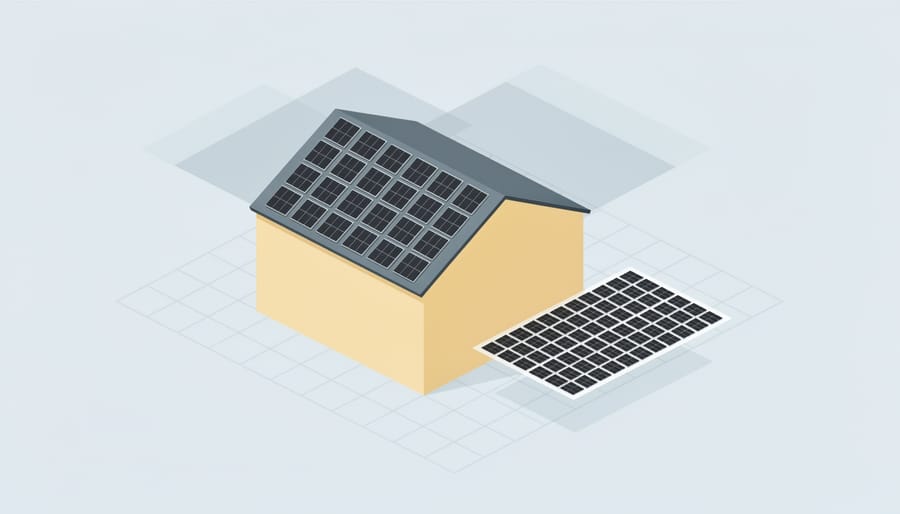
Your roof is where square footage and solar pricing actually meet. The number of panels you need depends on how much electricity your household uses, and the number of panels you can fit depends on your usable roof area. A south-facing, unshaded roof with plenty of room gives you flexibility. A smaller or partly shaded one may cap your system size, which in turn caps your total cost.
Here’s the simple chain: your energy use sets your target system size in watts, and that size multiplied by the cost per watt gives you the price. For context, a 6kW system for a 1,500 sq. ft. home averages about $18,180 nationally, though your quote will depend on your own usage and roof.
This is why efficiency upgrades are so powerful. Sealing leaky ductwork, adding attic insulation, and air sealing can trim how much energy your home needs, which means a smaller, less expensive system can do the same job. A home energy audit shows you where to start. Smaller systems also pair nicely with durable equipment, so it’s worth understanding the typical solar panel lifespan before you size up. Right-sizing first means you invest only in the capacity your home truly needs.
Equipment, Batteries, and Installation Details
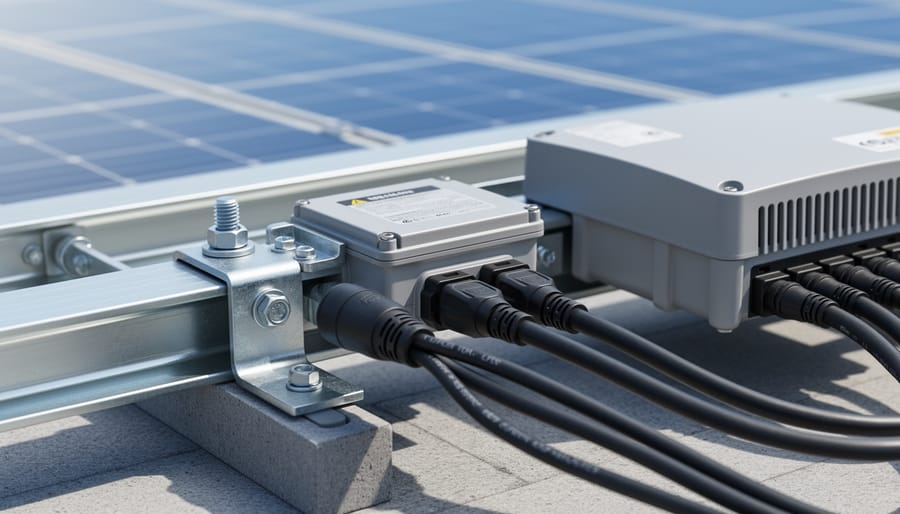
Your quote changes more with the details than with the headline price per watt. Start with equipment. Panels and inverters come in different quality tiers, and higher-efficiency models usually cost more upfront. They can also produce more power from a smaller patch of roof, which matters if space is tight. The inverter, the box that turns your panels’ output into power your home can use, is another place where choices shift the price.
Batteries are the biggest optional add-on. A battery stores extra solar power for evenings or outages, but it raises the total cost, so decide whether backup power is worth it for you before you ask for quotes.
Then comes the installation itself. A simple, unshaded roof is quicker to work on than one with several angles, vents, or tricky access, and more labor time means a higher quote. Permitting and paperwork are part of the price too, since your system needs approval before it connects to the grid.
For a sense of the range, national figures put a typical full installation between $15,000 and $40,000, with a 6kW system for a 1,500 sq. ft. home averaging about $18,180. Your own number lands somewhere in that spread depending on these choices. Careful, quality workmanship at this stage helps your system perform well for years, which protects your long-term cost savings.
Your Utility, Financing, and Incentives
The sticker price on a solar quote isn’t always what you end up paying. Three things shape your real cost: your utility, how you pay, and the incentives you qualify for.
Your utility matters because it sets the rules for connecting your system to the grid and how you’re credited for the power you send back. Those policies can change, so it’s smart to check your utility’s current requirements before you sign anything.
How you pay also moves the needle. Paying cash means a bigger upfront check but no interest. A loan spreads the cost out, though interest and fees add to the total. Incentives can bring the net price down, but programs and amounts change often, so confirm what’s available today rather than relying on an old number.
Here’s a simple way to estimate your net cost:
- Get your recommended system size in watts from a written quote.
- Multiply that size by the quoted per-watt price (national averages run about $2.75 to $3.25 per watt in 2026).
- Subtract any incentives you’ve verified are currently available to you.
- Add financing costs, such as loan interest and fees, if you’re not paying cash.
A local installer can walk you through current programs and your utility’s policies, so your final number reflects your actual situation, not just the sticker price.
Pros and Cons of Going Solar at Today’s Prices
Going solar is a big decision, and it helps to see the full picture before you start collecting quotes. At today’s prices, most U.S. homeowners pay between $15,000 and $40,000 for a full installation, so the trade-offs are worth weighing honestly.
Pros
- Solar can lower your monthly energy costs by producing clean power right on your roof.
- Every kilowatt-hour you generate helps shrink your household’s carbon footprint.
- A well-installed system is a long-term investment in your home’s energy independence.
- Pairing solar with efficiency upgrades like insulation can boost your overall cost savings.
Cons
- The upfront investment is significant, with typical systems running $25,000 to $30,500.
- Roof orientation, shading, and condition affect how well your home suits solar.
- Quotes can vary widely, so comparing several is a smart move.
- Choosing equipment takes research, from panels to inverters.
None of these points is a dealbreaker. They simply mean the right system for your neighbor may not be the right one for you. If equipment is your sticking point, our guide to the best solar panels is a helpful place to start. A professional installation and a home energy audit can then point you toward a system sized for your actual needs.
DIY vs. Professional Solar Installation: What Makes Sense?
Going the DIY route can look appealing when you’re staring at a quote in the $15,000 to $40,000 range. Skipping the labor line can feel like an easy way to trim the bill. But solar is a different kind of home project than painting a room or swapping a light fixture.
You’d be working on a roof and connecting a system to your home’s electrical panel and the grid. Mistakes there affect safety, not just appearance. A licensed installer brings training, the right equipment, and experience with roof layouts, wiring, and mounting that keeps panels secure through Colorado’s hail and wind.
Permitting and utility interconnection are part of the price either way. Your system needs a local permit and approval from your utility before it can switch on. A professional crew handles that paperwork routinely, which can save you time and back-and-forth. If you go DIY, that work lands on you.
Here’s how the two paths compare:
– Upfront cost: DIY may lower labor expenses, but you still pay for equipment, permits, and utility requirements.
– Safety: Pros are trained for roof work and high-voltage wiring.
– System performance: Careful design and clean workmanship help your panels produce as expected for years.
– Time and hassle: Installers coordinate the inspections and approvals from start to finish.
Quality workmanship is what protects your long-term cost savings. A well-installed system just works, year after year, and that’s the real payoff of choosing an experienced local team.
Solar Pricing FAQs for Colorado Homeowners
Solar pricing can feel confusing, so here are quick answers to the questions Colorado homeowners ask us most. Use these figures as a starting point, then confirm details with a local quote.
How much do solar panels cost per square foot?
Solar isn’t typically priced per square foot. Installers quote by system size in watts, which is why the most reliable estimate is system size multiplied by cost per watt. In 2026, that runs roughly $2.80 to $3.20 per watt before incentives.
How much does a 6kW system cost?
A national average of about $18,180 is cited for a 6kW system on a 1,500 square foot home. Your actual price depends on your equipment, roof, and installer.
What does a full installation cost overall?
Most U.S. homeowners pay between $15,000 and $40,000 for a complete solar installation in 2026. Some analyses put a typical home system between $25,000 and $30,500.
How do I get an accurate Colorado quote?
Request a customized quote from a local installer who can look at your roof, shading, and energy use. A home energy audit first can help right-size the system so you only pay for what you need.
Keep in mind that quotes vary with equipment choices, battery storage, labor, and permitting, so it’s smart to compare more than one. We haven’t confirmed 2026 Colorado market rates, which is another reason a local quote beats any national average. Pair your solar plans with efficiency upgrades like better insulation or sealed ductwork, and you may be able to install a smaller, more affordable system. That’s a win for your wallet and for sustainability.
Solar pricing makes the most sense when you think in watts instead of square feet. Roof space tells you how many panels will fit, but the system size you need depends on how much energy your home uses. In 2026, most U.S. homeowners pay between $15,000 and $40,000 for a full installation, with per-watt costs landing around $2.75 to $3.25 nationally. Your own quote will move up or down based on equipment, roof details, and how you pay.
Because Colorado market rates for 2026 aren’t something we can pin down from national averages, a local quote is the only way to see your real number. The good news is you don’t have to guess. Reach out to Denver Home Energy for a customized quote and a home energy audit. We’ll look at your roof, your energy habits, and any efficiency upgrades that could shrink the system you need. Right-sizing your solar means more cost savings, a lighter footprint, and a system built with quality workmanship to last.