
Keeping your EV’s finish pristine at home takes less than 30 minutes per wash when you sync the task with your charging schedule. Colorado EV owners can leverage the predictable dwell time during home charging to streamline exterior care, combining energy-smart vehicle ownership with efficient maintenance routines that conserve water and protect against our state’s intense UV exposure and seasonal road grime.
The connection between home energy and vehicle care runs deeper than you might expect. If you’ve already invested in home charging infrastructure or are considering solar panel pricing to offset charging costs, you’re already thinking about your home as an integrated energy ecosystem. That same mindset applies to maintenance. Your EV sits in one spot for hours during charging, creating the perfect window for low-pressure washing, quick detail work, or applying protective coatings without rushing.
Colorado’s climate demands particular attention to your EV’s finish. High-altitude sun degrades clear coats faster than at sea level, while winter road treatments and summer dust storms create a constant assault on painted surfaces. Regular home cleaning prevents costly paint correction down the road and maintains resale value, all while you’re already parked and plugged in.
Why Home Charging Makes EV Cleaning Easier
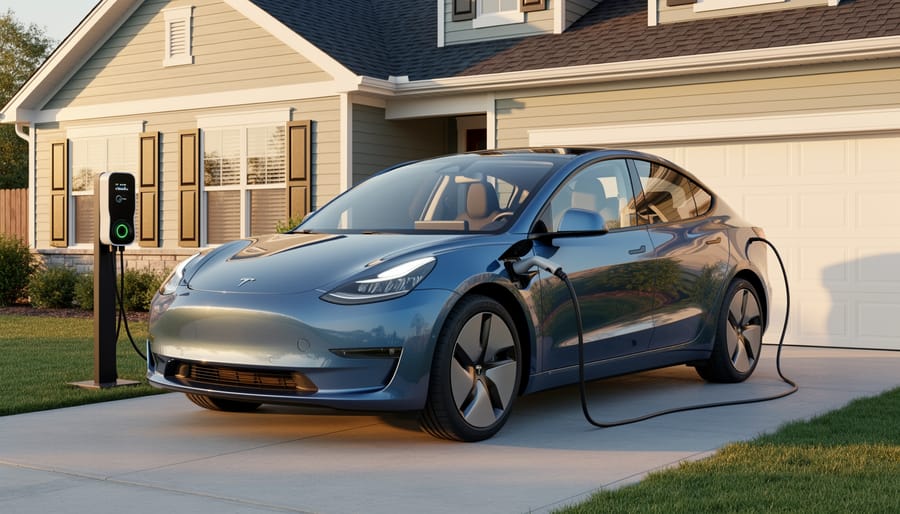
When you own an EV, your vehicle spends predictable hours parked at home during charging sessions, typically overnight or during work hours. This creates consistent maintenance windows that gas vehicle owners simply don’t have. Instead of rushing through a car wash between errands, you can integrate cleaning into your existing routine while your EV sits connected to its charger.
Gas vehicles leave home fueled and ready, so they’re rarely stationary long enough for thorough cleaning unless you specifically schedule it. EV owners naturally have their vehicle home and accessible several times per week during multi-hour charging cycles. This shift turns maintenance from an interruption into a seamless part of your schedule.
Key Takeaway: Home charging creates 6-8 hour windows when your EV is stationary and accessible, transforming vehicle cleaning from a separate errand into a convenient task you can complete during existing downtime.
Colorado’s climate makes this advantage even more valuable. Our dry air, intense UV exposure at elevation, and winter road treatments accelerate finish degradation. The Colorado Department of Transportation uses magnesium chloride on roads, which bonds to paint and attracts moisture if left on the surface. Experts recommend you wash road salt regularly during winter months, ideally within days of exposure.
Regular cleaning prevents contaminants from etching into your EV’s finish, preserving both appearance and resale value. Professional treatments like Brisbane ceramic coating add extra protection, but they still require consistent maintenance to perform effectively. Home charging gives you the time and access to provide that care without disrupting your day.
What You’ll Need: Tools and Materials for Home EV Cleaning
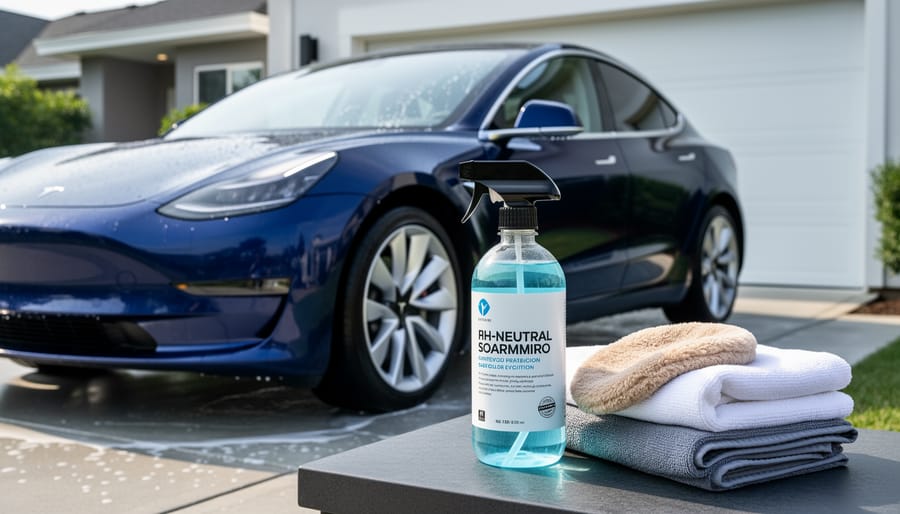
Cleaning your EV at home doesn’t require expensive equipment, but the right supplies make a real difference in protecting modern automotive finishes. EVs often feature advanced paint systems and protective coatings that respond better to specific products than traditional car care items.
Start with these essentials for a safe, effective home cleaning setup:
- pH-neutral car wash soap designed for modern clear coats and ceramic coatings
- Two 5-gallon buckets (one for soapy water, one for rinsing) to prevent scratching
- Multiple microfiber wash mitts that won’t trap dirt against the paint
- Plush microfiber drying towels with high absorption to minimize water spots
- Soft-bristle wheel brush for cleaning rims without damaging finishes
- Spray bottle for quick detailer or waterless wash solution
- Garden hose with adjustable spray nozzle for water control
The pH-neutral soap matters more than you might think. Many conventional car washes use alkaline or acidic formulas that can gradually degrade the protective layers on your EV’s paint. Modern vehicles, especially those with factory ceramic coatings or PPF, need gentler chemistry to maintain their hydrophobic properties.
Microfiber is non-negotiable. Cotton towels and sponges create microscopic scratches over time, dulling your finish. Quality microfiber lifts and traps dirt particles rather than dragging them across the surface. Buy enough that you can use fresh towels for different sections without cross-contaminating.
For Colorado homeowners conscious about water conservation, consider adding a foam cannon that attaches to your hose. These tools create thick suds using less water than traditional methods, and the foam clings longer, giving cleaning agents more dwell time to break down dirt. This efficiency aligns perfectly with the resource-conscious mindset that likely drew you to EV ownership in the first place.
Important Safety and Precautions Before You Start
Before you start washing your EV at home, take a moment to understand the unique safety considerations that come with cleaning an electric vehicle. While EVs are designed to handle rain and typical weather exposure, actively spraying water around electrical components requires some specific precautions.
First and most critical: always disconnect your charging cable before cleaning. Even though EVs have multiple safety systems, removing the charger eliminates any risk of water interacting with active electrical connections. Wait at least five minutes after unplugging to allow any residual charge in the system to dissipate.
Pay attention to water temperature, especially during Colorado’s temperature swings. Avoid washing your EV when the exterior is extremely hot from direct sun or extremely cold (below 32°F). Sudden temperature changes can stress the paint and coating, and frozen surfaces won’t clean properly. Cold water on a sun-heated finish can cause water spots that are difficult to remove.
Check your surroundings before starting. Make sure you’re not standing in pooled water while handling any electrical equipment, and keep your extension cords and power washers away from puddles. If you’re cleaning during or shortly after a charging session, be aware that some components under the vehicle may be warm.
Don’t clean your EV during active rain or snow, wait for stable weather. Not only will precipitation interfere with your cleaning results, but wet conditions increase electrical risks and make it harder to properly dry the vehicle afterward.
Step-by-Step: The Home EV Cleaning Process
Preparing Your EV and Workspace
Park your EV in a shaded area of your driveway or garage where you have good access to all sides of the vehicle. If your EV is charging, verify that the charging cable connection is secure and that the port door is fully closed, you’ll work around this area carefully. Position your two buckets, microfiber towels, and cleaning supplies within easy reach but away from any water runoff paths that could create puddles near electrical outlets or charging equipment.
Check that your hose or pressure washer can reach all sections of the vehicle without stretching across the charging cable. If working indoors, ensure adequate ventilation and that your garage floor has proper drainage. Lay out your tools in the order you’ll use them: pre-rinse equipment first, then wash supplies, followed by drying materials. This setup takes about five minutes but prevents mid-wash interruptions and keeps you from tracking dirty water near charging connections.
The Two-Bucket Wash Method
Fill one bucket with your pH-neutral soap solution and the other with clean rinse water. This method prevents dirt from contaminating your wash mitt and scratching your EV’s finish.
Start at the top of your vehicle and work downward in sections. Dip your mitt into the soapy water, wash a panel using straight, overlapping strokes rather than circular motions. After each panel, rinse the mitt thoroughly in your clean water bucket before returning to the soap. This simple step removes the dirt particles you just lifted off the paint.
The rinse bucket does the heavy lifting for water conservation. You’ll use about three gallons total instead of running a hose continuously, which matters in Colorado where water efficiency counts. Replace your rinse water if it becomes visibly dirty, typically once per wash.
Keep your buckets in the shade and work quickly in sections. Colorado’s dry air causes soap to dry fast on paint, leaving spots if you let it sit too long. Complete each section before moving to the next, maintaining a wet edge to prevent streaking.
Proper Drying Techniques for EV Finishes
Drying your EV correctly matters more in Colorado’s dry climate than you might expect. The low humidity causes water to evaporate quickly, leaving mineral deposits behind as white spots that can etch into your paint if left too long.
Start drying immediately after rinsing, beginning at the top and working downward. Use a clean, plush microfiber drying towel, not terry cloth or chamois, which can trap particles and scratch modern EV coatings. Gently blot rather than drag the towel across surfaces. For best results, use a dedicated drying towel separate from your wash mitts.
Pay special attention to crevices around mirrors, door handles, and charging ports where water pools. A leaf blower or dedicated car dryer works exceptionally well here, using no physical contact while clearing water from tight spaces where towels can’t reach.
Quick Detailing and Protection
After drying, a quick detailing spray adds an extra layer of protection and shine in under five minutes. This step isn’t mandatory after every wash, but it’s worth doing every few sessions to maintain your EV’s finish between full cleanings.
Spray a light mist of detailing product onto one panel at a time, never the entire vehicle at once. Use a clean microfiber towel to wipe in straight lines, not circles, which can create micro-scratches. Flip the towel frequently to a fresh section. You’re not scrubbing; you’re gently gliding across the surface to lift any remaining dust and enhance the protective layer.
For extra protection, apply a spray sealant or ceramic booster every month. These products bond to your EV’s clear coat and make subsequent washes easier by creating a slick surface that repels dirt and water. One application typically lasts four to six weeks, depending on weather exposure.
Focus on high-contact areas like door handles and the area behind your charging port, which accumulate oils and grime faster. These spots benefit most from the added protection.
Verification: How to Know You’ve Done It Right
After you’ve finished cleaning your EV, step back and inspect your work in good lighting, natural daylight works best. Walk around the vehicle slowly, checking from different angles to catch any streaks, water spots, or areas you might have missed.
Run your hand gently across the paint surface. It should feel smooth and slick, not rough or gritty. If you notice any texture, you’ve likely left contaminants behind that need another pass with your wash mitt. Check the lower panels and wheel wells especially, as dirt tends to accumulate in these areas.
Look for water beading on the surface. Fresh wax or sealant should cause water droplets to form tight beads that roll off easily. If water sheets across the paint instead, your protective coating may need reapplication. In Colorado’s intense UV environment, this protection is critical for long-term finish preservation.
Inspect around charging ports, door handles, and trim pieces for soap residue or water pooling. These spots often get overlooked but can leave visible marks as they dry. A clean microfiber cloth can quickly address any remaining drops.
If you notice swirl marks or light scratches you didn’t see before, you may have used too much pressure or contaminated materials. These issues require proper correction with clay bar treatment or polish before your next wash.
Creating an Energy-Efficient Cleaning Schedule
Timing your EV cleaning around your charging schedule turns a chore into a seamless routine. Your vehicle typically charges for several hours at home, creating predictable windows when it’s stationary and accessible. Clean during off-peak hours when you save energy at home and take advantage of lower electricity rates, usually between 9 PM and 6 AM in Colorado.
Colorado’s dramatic weather shifts demand a flexible approach to maintaining your EV’s finish:
- Winter (December, February): Clean every 10-14 days to remove road salt and de-icing chemicals that accelerate paint damage
- Spring (March, May): Wash weekly during peak pollen season, as tree debris and allergens bond to surfaces quickly
- Summer (June, August): Every two weeks is sufficient, with spot cleaning after mountain trips or dust storms
- Fall (September, November): Weekly cleaning helps manage leaf residue and prepares the finish for winter protection
Match your cleaning schedule to weather patterns rather than arbitrary dates. After snowstorms, wait for temperatures above 40°F to avoid frozen water damaging seals. During Colorado’s intense summer sun, clean in early morning or evening to prevent rapid drying that causes water spots.
Track your charging patterns and set reminders for every third or fourth charge cycle, adjusting frequency based on driving conditions. This approach integrates vehicle care into your existing home energy routine without adding complexity. If you’re optimizing your overall home systems, understanding energy audit cost can help identify other efficiency opportunities that complement your EV ownership.
Common Questions About Home EV Cleaning
Common Questions About Home EV Cleaning
Colorado EV owners frequently ask practical questions about maintaining their vehicle’s finish at home, especially when balancing energy efficiency goals with proper care. These common concerns address everything from seasonal challenges to resource management.
How much water does home EV cleaning actually use?
The two-bucket method typically uses 3-5 gallons total, compared to 15-20 gallons for a standard hose wash. Using a spray bottle for rinseless washes can reduce water consumption to under 2 gallons while still achieving excellent results.
Can I clean my EV in Colorado winter temperatures?
Clean your EV only when temperatures stay above 40°F and avoid washing right before freezing conditions. Cold water on cold paint can cause thermal shock, and moisture can freeze in panel gaps and door seals, causing damage.
Is it safe to wash my EV while it’s charging?
Most EVs can be washed while charging since charging ports are sealed, but avoid directly spraying the charging cable connection or port area. If you’re concerned, simply pause charging during the 15-minute wash process.
What cleaning products work best for EV finishes?
Use pH-neutral car soaps specifically designed for modern clear coats, avoiding dish soap or harsh detergents that strip protective layers. Microfiber towels and wash mitts prevent scratching while providing effective cleaning.
Many homeowners wonder how vehicle maintenance fits into their broader energy strategy. Keeping your EV clean at home during off-peak charging hours complements efforts to achieve lower electric bills through smart energy management. The predictable schedule of home charging creates natural maintenance windows that gas vehicle owners simply don’t have, making EV ownership uniquely suited to efficient home routines.
Owning an EV in Colorado gives you a built-in advantage most car owners don’t have: your vehicle parks at home regularly, charging and ready for quick maintenance. This natural rhythm transforms what used to be a chore into a simple routine that protects your investment while conserving resources.
The same mindset that led you to choose an EV, making smart, sustainable choices, applies to every aspect of home ownership. When you optimize your home’s energy efficiency, you’re supporting not just your vehicle but your entire household. Lower energy costs mean more affordable charging. Better insulation and updated systems create the comfortable, efficient home environment that complements your commitment to sustainability.
At Denver Home Energy, we help Colorado homeowners make these connections. Whether it’s improving your home’s insulation to reduce heating costs, upgrading to energy-efficient systems, or simply finding ways to use less while living better, every improvement reinforces your decision to drive electric. Your EV represents forward thinking. Your home’s energy efficiency should reflect that same standard.
Keep your EV clean, keep your home efficient, and you’ll save time and money on both.