
Schedule annual chimney inspections before winter arrives—Colorado’s altitude and dry climate create unique creosote buildup patterns that increase fire risks. Professional chimney sweeps can identify structural damage from freeze-thaw cycles and ensure proper ventilation, which is essential at our elevation. For comprehensive maintenance guidance, visit this site to connect with qualified local experts.
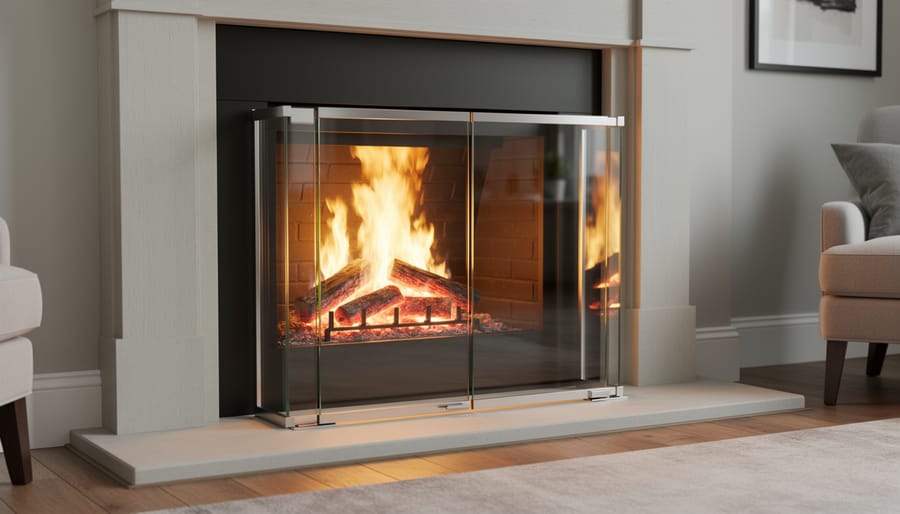
Install glass doors and keep your damper closed when not burning fires to prevent heated air from escaping up the chimney—a leak that can waste 30% of your home’s warmth during Colorado’s harsh winters. This simple upgrade immediately stops the invisible energy drain costing hundreds annually.
Switch to seasoned hardwoods like oak or maple with moisture content below 20%, which burn hotter and cleaner than softwoods or green wood. Colorado’s low humidity helps wood season faster, but proper storage remains critical for maximizing heat output while minimizing dangerous creosote accumulation.
Consider fireplace inserts or EPA-certified stoves that convert inefficient masonry fireplaces into heating powerhouses, delivering 70-80% efficiency compared to traditional fireplaces’ dismal 10-15%. These upgrades significantly reduce heating costs while providing consistent warmth throughout your Colorado home during extended cold snaps.
Why Colorado’s Climate Makes Fireplace Safety Critical
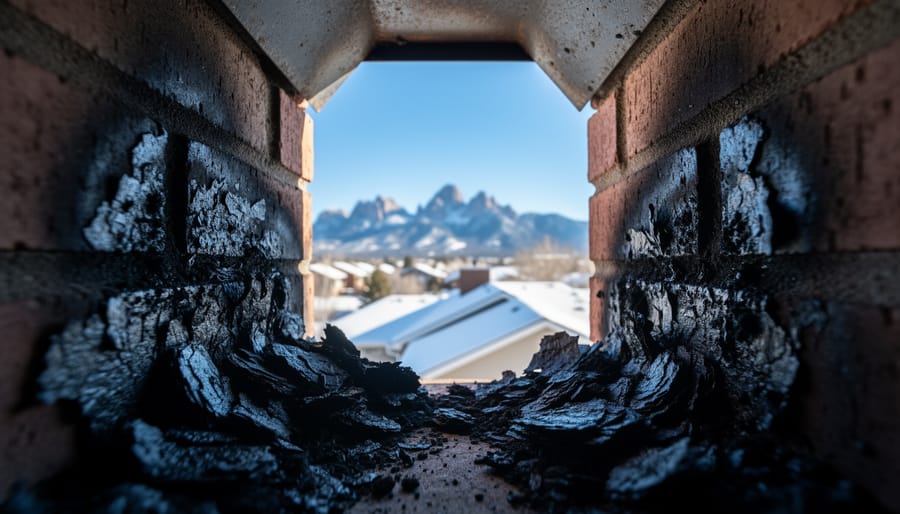
The Hidden Dangers of High-Altitude Fireplace Use
Living at Colorado’s elevated altitudes creates unique challenges for fireplace operation that many homeowners don’t realize. At higher elevations, the air contains less oxygen, which directly impacts how efficiently your fireplace burns fuel. This reduced oxygen availability means incomplete combustion, leading to more creeping smoke, increased creosote buildup, and potentially dangerous carbon monoxide production.
Carbon monoxide is especially concerning in Colorado homes because the thinner air makes it harder for fireplaces and chimneys to create the strong draft needed to properly vent harmful gases outside. When combustion isn’t complete, carbon monoxide levels can rise quickly in your living space without you even noticing—this colorless, odorless gas is truly a silent threat.
To protect your family, install carbon monoxide detectors on every level of your home and test them monthly. Have your chimney professionally inspected and cleaned at least annually, as altitude-accelerated creosote buildup increases fire risks. You’ll also want to ensure adequate ventilation when operating your fireplace, even during cold weather. Understanding these altitude-specific challenges isn’t just about energy efficiency and cost savings—it’s about keeping your home safe while you stay warm through Colorado’s harsh winters.
Dry Climate, Higher Fire Risk
Colorado’s famously dry climate creates unique fire safety challenges that every homeowner should understand. With average humidity levels often dropping below 20%—and sometimes into single digits during winter—our state experiences conditions that allow fires to ignite more easily and spread faster than in more humid regions.
When humidity is low, everything in your home contains less moisture, including the wood in your fireplace, nearby furniture, and even the air itself. This means embers can stay hot longer and ignite combustible materials more readily. A spark that might harmlessly extinguish in a humid climate can start a house fire here in minutes.
This dry environment demands extra vigilance with your fireplace. Never leave fires unattended, even for a quick trip to another room. Keep a working fire extinguisher within easy reach, and ensure your spark screen or glass doors are always in place while burning. Clear the area around your fireplace of newspapers, magazines, decorative items, and furniture—maintain at least a three-foot safety zone.
Regular chimney inspections become even more critical in our climate. Creosote buildup combined with dry conditions creates a perfect storm for chimney fires. Schedule annual professional inspections to protect your home and family while maximizing your fireplace’s energy efficiency.
Essential Fireplace Safety Practices Every Colorado Homeowner Should Follow
Annual Chimney Inspections and Cleaning
Colorado’s harsh winters and high-altitude conditions put unique stress on your chimney system, making annual professional inspections essential for both safety and energy efficiency. During a thorough inspection, a certified technician examines the chimney structure, flue liner, damper, and firebox for cracks, creosote buildup, and blockages that could cause dangerous carbon monoxide leaks or chimney fires. Colorado’s dry climate can accelerate deterioration of masonry and mortar, while freeze-thaw cycles create structural vulnerabilities that worsen over time.
Professional cleaning removes creosote deposits—a highly flammable byproduct of burning wood—that accumulate faster when fireplaces aren’t operating efficiently. Even if you only use your fireplace occasionally, annual inspections catch problems before they become costly repairs or safety hazards. Technicians also check for animal nests and debris that commonly block chimneys during Colorado’s off-season months.
For homes that use their fireplace as a primary heating source, consider scheduling inspections twice annually. This proactive approach not only protects your family but also ensures your fireplace operates at peak energy efficiency, reducing heating costs throughout the cold season. Quality workmanship during inspections means catching small issues early, preventing emergency repairs and maintaining optimal performance year after year.
Carbon Monoxide and Smoke Detector Placement
Protecting your family from carbon monoxide and smoke hazards starts with proper detector placement throughout your home. Install carbon monoxide detectors on every level of your home, including the basement, and place them within 15 feet of bedrooms and fireplace areas. Since carbon monoxide mixes with air, mounting detectors at knee height or on ceilings both work effectively.
For smoke detectors, position them on ceilings at least 10 feet away from your fireplace to prevent false alarms from normal fireplace use. Colorado’s dry climate can create more dust and particulates, so regular testing becomes even more important here.
Test both types of detectors monthly by pressing the test button, and replace batteries twice yearly—many Colorado homeowners sync this task with daylight saving time changes in spring and fall. Replace entire detector units every 7-10 years, as sensors lose sensitivity over time.
Keep a carbon monoxide detector near your fireplace even if you’ve upgraded to an energy-efficient model. While modern fireplaces reduce emissions significantly, detector protection remains your essential safety backup. This small investment in proper placement and maintenance provides peace of mind while you enjoy the warmth and cost savings of your fireplace throughout Colorado’s long heating season.
Safe Burning Practices for Wood-Burning Fireplaces
Getting the most from your wood-burning fireplace while keeping your family safe starts with burning the right fuel properly. Here in Colorado, our dry climate actually works in your favor when it comes to seasoning wood, but you’ll still want to follow best practices for efficiency and safety.
Always burn hardwoods like oak, ash, or maple that have been seasoned for at least six months. Properly seasoned wood has a moisture content below 20 percent, burns hotter, produces less creosote buildup, and delivers better energy efficiency. You can test wood by knocking two pieces together—seasoned wood sounds hollow, while green wood thuds. Split wood dries faster, so choose pieces that have already been split and show cracks radiating from the center.
When building your fire, start with crumpled newspaper and small kindling, gradually adding larger pieces as the fire establishes. This creates better airflow and reduces smoke. Keep fires moderate in size rather than roaring infernos—smaller, hotter fires burn cleaner and produce less creosote, which means cost savings on chimney cleaning and reduced fire risk.
Never burn treated wood, painted lumber, plywood, particle board, or cardboard. These materials release toxic chemicals and create dangerous creostor buildup. Similarly, avoid burning wet or green wood, which smolders inefficiently and sends most of its potential heat up the chimney as smoke. Christmas trees, glossy magazines, and trash don’t belong in your fireplace either.
By following these practices, you’ll maximize heat output while minimizing safety risks and maintenance costs.
The Energy Efficiency Problem With Traditional Fireplaces
How Much Money Is Your Fireplace Actually Costing You?
That cozy fire might be warming your heart, but it’s likely cooling down your wallet. Traditional wood-burning fireplaces can lose up to 90% of their heat straight up the chimney, effectively pulling heated air from your home and sending it outside. In Colorado’s harsh winter climate, this means your furnace works overtime to replace that lost warmth.
Let’s break down the real numbers. An inefficient fireplace can cost Colorado homeowners between $200 and $500 annually in wasted energy. Even when you’re not using it, an open damper acts like leaving a window open all winter long, allowing conditioned air to escape 24/7. During Colorado’s coldest months, this can add 10-30% to your heating bills.
Here’s what makes it worse: while you’re burning wood, your fireplace actually creates negative pressure in your home. This pulls warm air from other rooms toward the fire, where it promptly escapes through the chimney. You might feel toasty sitting right in front of the flames, but the rest of your house is getting colder, forcing your heating system to compensate.
The good news? These losses are completely preventable. Simple upgrades like installing glass doors, adding a top-sealing damper, or converting to a high-efficiency gas insert can dramatically reduce energy waste. Many Colorado homeowners see these improvements pay for themselves within just a few years through energy savings alone.
Understanding Fireplace Heat Loss vs. Heat Gain
It might seem counterintuitive, but your cozy fireplace could actually be cooling down your home rather than warming it. Here’s why: traditional open fireplaces pull heated air from inside your home and send it straight up the chimney. For every cubic foot of warm air that escapes, cold Colorado air gets drawn in through cracks and gaps to replace it. This creates a continuous cycle where your furnace works overtime to heat air that simply disappears.
Think of your fireplace as a 12-inch hole in your roof. The chimney draft needed to keep smoke out of your living space requires tremendous airflow, often exhausting 300 to 600 cubic feet per minute. That’s like running several bathroom exhaust fans simultaneously. This constant air exchange affects your overall home ventilation system and indoor air pressure.
Studies show that traditional fireplaces operate at just 10-15% efficiency, meaning 85-90% of the heat generated goes up the chimney along with your heating dollars. Meanwhile, your home’s heating system struggles to compensate for this massive heat loss, significantly increasing your energy costs during Colorado’s harsh winter months.
Proven Ways to Make Your Fireplace More Energy Efficient
Install Glass Doors and Damper Controls
One of the most cost-effective upgrades you can make is installing glass doors on your fireplace. When your fireplace isn’t in use, an open firebox acts like a giant hole in your home, allowing heated air to escape up the chimney. Quality glass doors create a barrier that significantly reduces heat loss, helping maintain your home’s temperature and lowering heating costs throughout Colorado’s long winter months.
Equally important is installing or upgrading your damper controls. A properly functioning damper seals your chimney when the fireplace isn’t burning, preventing warm air from escaping and cold drafts from entering. Many older Colorado homes have worn or damaged dampers that don’t seal completely, wasting energy year-round.
During use, glass doors with adjustable vents help control airflow, improving combustion efficiency and ensuring your fireplace burns cleanly. This means you’ll use less wood while generating more heat for your home. The combination of glass doors and a well-maintained damper typically pays for itself within a few heating seasons through reduced energy bills, making this upgrade both environmentally responsible and financially smart for Colorado homeowners focused on sustainability and comfort.
Consider a Fireplace Insert for Maximum Efficiency
If your traditional fireplace sends most of its heat straight up the chimney, you’re not alone. Many Colorado homeowners discover their cozy fire actually costs more than it saves. That’s where fireplace inserts become game-changers for both energy efficiency and cost savings.
A fireplace insert is essentially a sealed metal box that fits into your existing fireplace opening, transforming it from an energy drain into a legitimate heating source. Modern inserts can achieve efficiency ratings of 70-85%, compared to traditional open fireplaces that operate at just 10-15% efficiency. This dramatic improvement means more heat stays in your home instead of escaping through the chimney.
The technology behind inserts is straightforward but effective. They create a closed combustion system with tight-fitting glass doors that prevent heated air from being pulled up the chimney. Many models include built-in blowers that circulate warm air throughout your room, maximizing heat distribution. You can choose from wood-burning, gas, or pellet-fuel options depending on your preferences and existing setup.
For Colorado homeowners, the cost savings are substantial. Depending on your usage, a high-efficiency insert can reduce heating bills by several hundred dollars annually. While the initial investment typically ranges from $2,000 to $5,000 including installation, many homeowners see payback within 3-5 years through lower energy costs.
Quality installation matters significantly for both safety and performance. Working with experienced local professionals ensures your insert is properly sized, vented, and sealed to deliver maximum efficiency while meeting Colorado’s building codes and safety standards.
Seal and Insulate Your Chimney
Your chimney acts as a major pathway for heat loss, especially during Colorado’s long heating season. When chimney flashing deteriorates or damper seals wear out, warm air escapes even when your fireplace isn’t in use—essentially leaving a window open all winter long.
Colorado’s dramatic temperature swings accelerate this deterioration. The freeze-thaw cycles common along the Front Range can crack chimney crowns and damage mortar joints, while our intense UV exposure degrades flashing materials faster than in more temperate climates. These gaps don’t just waste energy; they invite cold drafts that make your heating system work overtime.
Start by inspecting your chimney damper. When closed, it should create an airtight seal. If you feel air movement or see daylight around the edges, consider upgrading to a top-sealing damper that sits at the chimney crown rather than the throat. These units provide superior insulation and last longer in our harsh conditions.
Check your chimney flashing where it meets your roof—this is a common failure point. Quality workmanship here prevents both air leakage and water infiltration. For unused chimneys, installing a chimney cap or balloon seal can prevent thousands of dollars in annual heat loss while maintaining proper ventilation for safety. These relatively simple improvements deliver immediate cost savings on your energy bills.
Strategic Fireplace Use: When to Burn and When Not To
Smart fireplace use means burning fires strategically to maximize comfort while minimizing energy waste. Only light your fireplace when you’re actively using the room—burning a fire in an empty space is like leaving money up the chimney. When running your central heating system, keep the damper closed to prevent warm air from escaping through the flue. This simple habit can significantly reduce heating costs throughout Colorado’s long winter season.
Consider your fireplace a supplemental heat source rather than your primary system. Zone heating allows you to lower your thermostat and warm just the rooms you occupy, making saving energy at home more manageable. On extremely cold nights when temperatures plummet, your central heating system typically provides more efficient whole-home warmth than a traditional fireplace. Save fireplace fires for moderate evenings when you want ambiance alongside supplemental heat. Our local expertise shows that homeowners who use this strategic approach see noticeable reductions in their monthly energy bills while still enjoying the comfort and charm of their fireplaces.
Gas Fireplaces vs. Wood-Burning: Safety and Efficiency Compared
Choosing between gas and wood-burning fireplaces involves weighing several important factors that directly impact your home’s safety, energy costs, and environmental footprint. Understanding these differences helps Colorado homeowners make informed decisions that align with their priorities.
From a safety perspective, gas fireplaces have a clear advantage. They produce no flying sparks, require minimal cleanup, and eliminate the risks associated with storing and handling firewood. Gas units also feature sealed combustion systems that prevent carbon monoxide from entering your home when properly installed and maintained. Wood-burning fireplaces, while traditional and beloved, demand more vigilance. They require regular chimney cleaning to prevent creosote buildup and chimney fires, proper ash disposal, and careful attention to ensure embers are fully extinguished.
Energy efficiency ratings tell a compelling story. Modern gas fireplaces can achieve efficiency ratings between 70-85%, meaning most of the fuel you purchase actually heats your home. Wood-burning fireplaces typically operate at only 10-30% efficiency, with much of the heat escaping through the chimney. This efficiency gap translates directly to your wallet. While natural gas prices fluctuate, operating a gas fireplace generally costs less per hour than purchasing and burning seasoned firewood, especially considering Colorado’s premium prices for quality, dry wood.
Operating costs extend beyond fuel. Wood-burning fireplaces require annual chimney inspections and cleaning, which can run several hundred dollars. Gas fireplaces need less frequent professional servicing, though annual safety checks remain important.
Environmental impact considerations matter too. Gas fireplaces produce fewer particulate emissions and reduce outdoor air pollution compared to wood smoke, which contains harmful particles that affect air quality in Colorado’s mountain communities. However, natural gas is a fossil fuel, while wood can be a renewable resource when sourced responsibly.
For Colorado homeowners prioritizing convenience, efficiency, and lower heating costs, gas fireplaces typically offer the best overall value. Wood-burning options appeal to those who cherish the authentic experience and don’t mind the extra maintenance commitment.
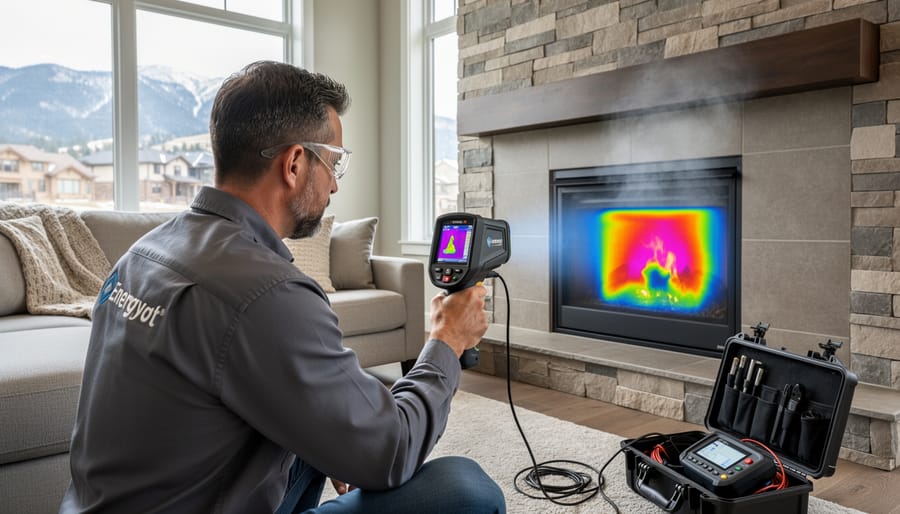
How Professional Energy Audits Identify Fireplace Problems
While a visual inspection of your fireplace might reveal obvious problems like cracked mortar or a damaged damper, many efficiency and safety issues hide beneath the surface. That’s where professional energy audits prove invaluable for Colorado homeowners.
A comprehensive energy audit goes far beyond what you can spot during a DIY inspection. Using specialized equipment like thermal imaging cameras, auditors can identify air leaks around fireplace frames and chimney chases that silently drain heated air from your home. These hidden gaps can account for significant energy losses, especially during Colorado’s harsh winter months when every degree of warmth counts.
Professional auditors also conduct blower door tests that measure your home’s overall air tightness. These tests often reveal how much conditioned air escapes through fireplace systems, quantifying the actual cost of an inefficient fireplace in real dollars. Many homeowners are surprised to learn their fireplace is responsible for 10-15% of their total heating costs.
Denver Home Energy’s certified auditors bring local expertise to every assessment, understanding how Colorado’s unique climate challenges affect fireplace performance. They can identify issues like inadequate insulation in chimney structures, backdrafting problems caused by our altitude, and combustion inefficiencies that pose carbon monoxide risks.
The detailed report you receive includes prioritized recommendations tailored to your specific situation, from simple fixes like adding chimney balloons to more substantial improvements like installing glass doors or upgrading to energy-efficient inserts. This professional guidance helps you make informed decisions about which improvements deliver the best return on investment, ensuring both safety and sustainability for your home.
Colorado homeowners can absolutely enjoy the warmth and ambiance of a crackling fire while maintaining an energy-efficient home. The key is understanding that safety and efficiency work hand in hand. By prioritizing regular chimney inspections, installing proper glass doors, ensuring adequate ventilation, and considering high-efficiency inserts or modern gas options, you’re making smart investments that protect your family and reduce energy costs.
Small changes deliver big results. Sealing your damper when not in use, adding a fireplace blower, and addressing drafts can significantly improve your home’s overall comfort and reduce those winter heating bills. These improvements aren’t just about savings—they’re about creating a more sustainable, comfortable living space that performs well in Colorado’s demanding climate.
Ready to maximize your home’s energy efficiency beyond the fireplace? A professional energy assessment can identify opportunities throughout your entire home. While energy audit cost varies, the comprehensive insights and long-term savings make it a worthwhile investment. Our local team brings quality workmanship and expertise to help Colorado homeowners achieve lasting comfort and efficiency. Let’s work together to make your home work smarter for you.